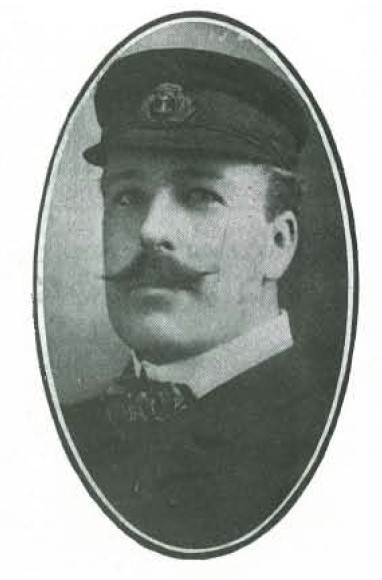
The History of RPAYC; The first 50 years 1867 - 1917

79 Years After The First Fleet

The Prince Alfred Yacht Club, PAYC, was established in 1867, just 79 years after the First Fleet arrived in Sydney Cove in 1788. In Europe, yacht owners and crews had been meeting in taverns since the early 18th century, and it is believed that by 1718 the first yacht club had been established in Russia. Settlement in Australia saw the tradition of yachting for pleasure continued with the first Australian Regatta Saturday being held on 28 April 1827. The Club has been involved in yacht racing for all of its 150-year history.
Meeting Called.
An advertisement was placed in the Sydney Morning Herald on 15 October 1867 which read “Mosquito Yacht Club. Boat owners wishing to join please meet in McGrath’s Hotel, King Street, Sydney, at 8 o’clock tonight.” That meeting was held on 15 October and those present resolved that the new Club’s name be “Prince Alfred Yacht Club” in honour of the visit to Australia by His Royal Highness the Duke of Edinburgh. Those present enrolled their names and paid a subscription of £1 1s 0d (1 guinea), with boat owners to pay an additional 10s 6d.

1867

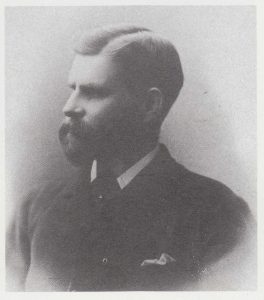
Commodore Richard Harnett. The first Commodore of the Prince Alfred Yacht Club, 1867–69.
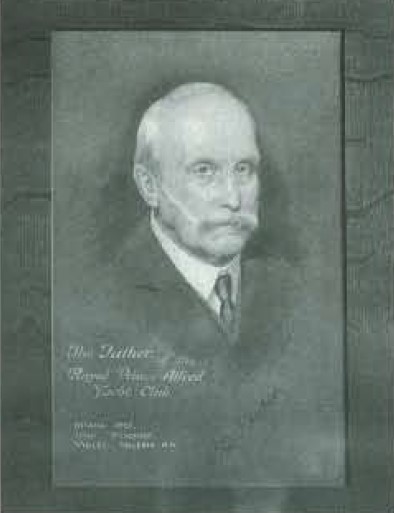
F. J. Jackson, whilst not holding any official office, assisted so much with the foundation of the Prince Alfred Yacht Club that he became known as the 'Father of the Club'
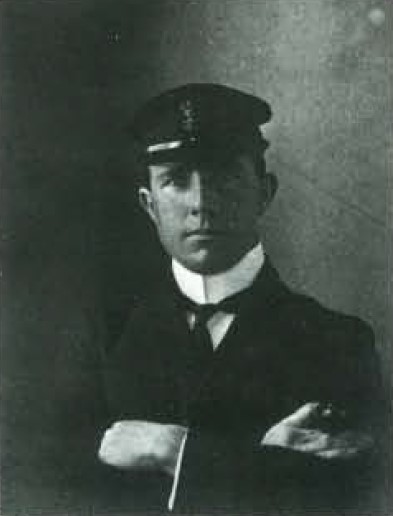
The club owes much to Laurence C. Waterman who joined the club in 1899. He held office in the club for some 34 years, mainly in the capacity of Honorary Secretary and later Secretary.

First Commodore Richard Harnett
Commodore 1867 – 1868
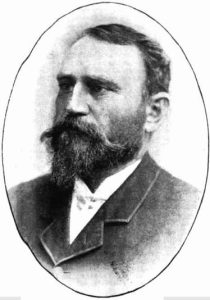
Richard Hayes Harnett, a leading colonist for 60 years, was one of the pioneer settlers of the North Shore. Mr. Harnett was well known as a yachtsman and in the early days he acquired a name as a skipper and designer. Aged 46 years, Richard Hayes Harnett became the first commodore of the Prince Alfred Yacht Club.

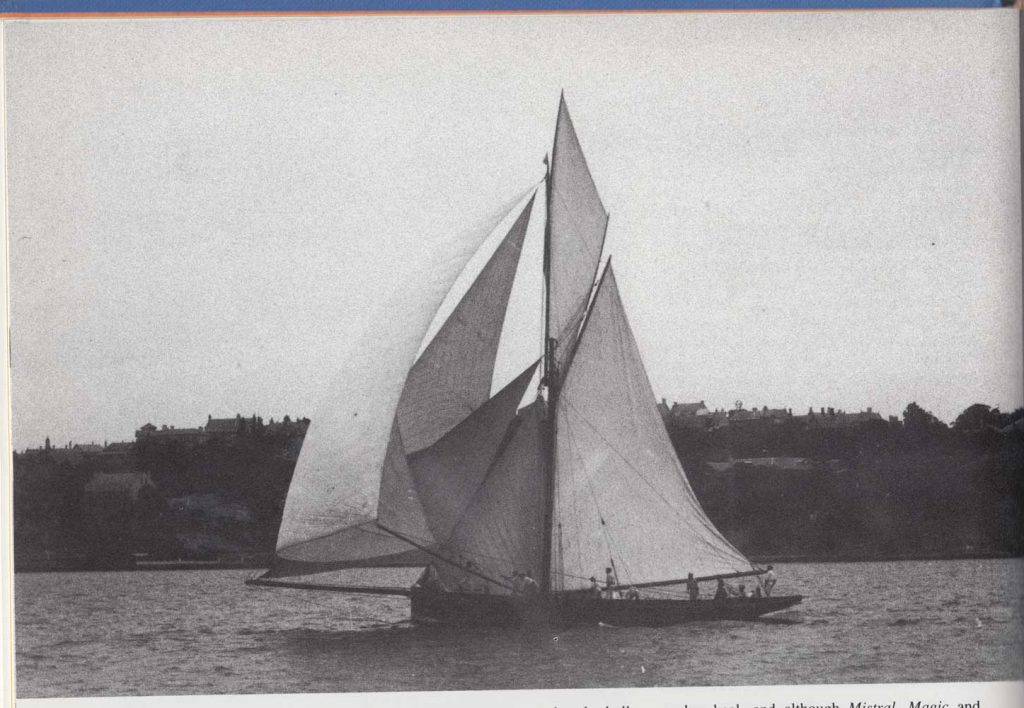
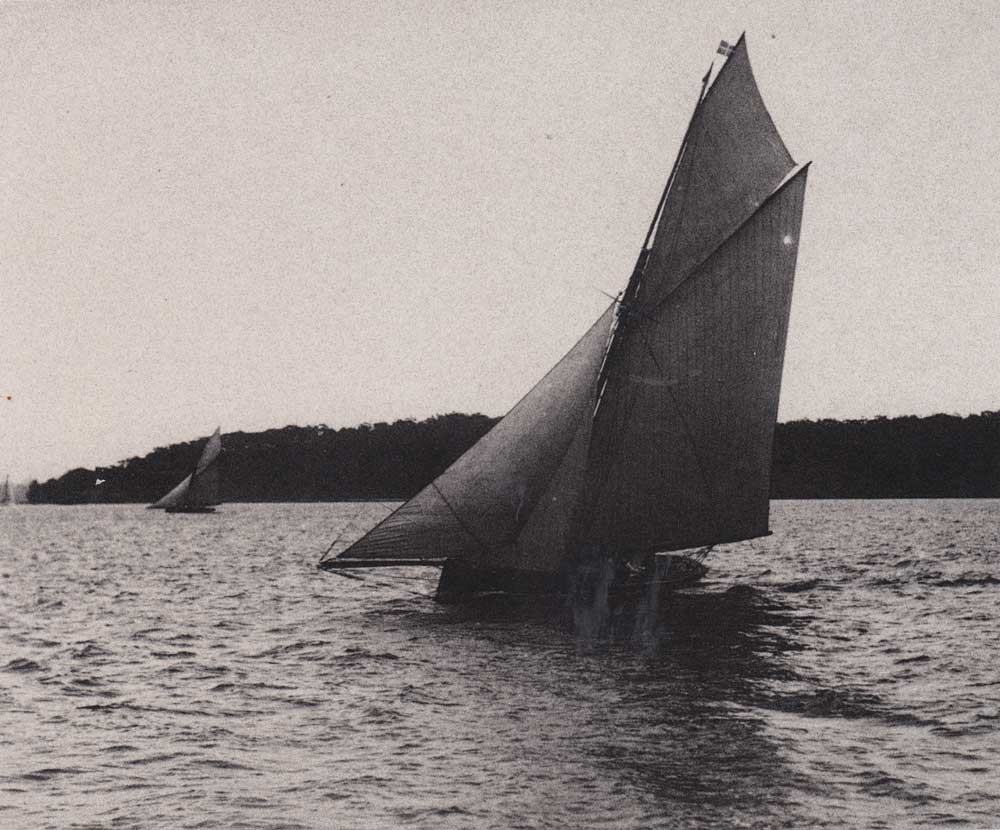
The famous "Australian" owned by Commodore Richard Harnett, the first Commodore of the Prince Alfred Yacht Club 1867 - 69 Note the man in the hounds

The Yacht Australian
This is a photo of the revolutionary very successful and famous yacht Australian, designed, skippered and owned by the first commodore of the Club, Richard Harnett. The Australian was 36 feet (11 metres) long and 6 feet 6 (2 metres) in beam. The yacht was said to be 50 years ahead of her time and won many races.

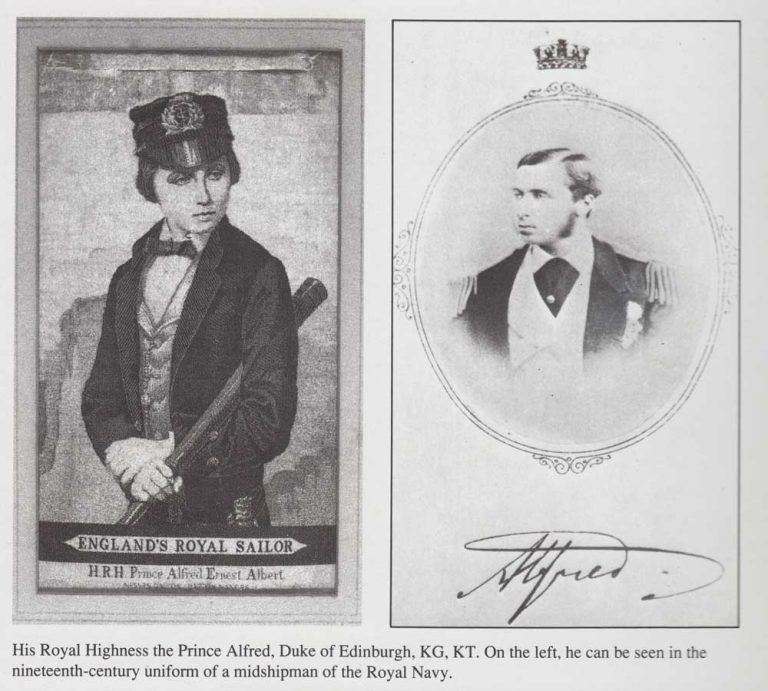
HRH Prince Alfred, Duke of Edinburgh

His Royal Highness, Prince Alfred, second son of Queen Victoria, visited Australia in 1867 aged 23. Prince Alfred had a long and distinguished naval career. The Club was named Prince Alfred Yacht Club in honour of the Prince’s visit.
His Royal Highness the Prince Alfred, Duke of Edinburgh, KG, KT. On the left, he can be seen in the nineteenth-century uniform of a midshipman of the Royal Navy

Letter to Prince Alfred
A letter was written to HRH Prince Alfred in November 1867 requesting the Prince to sanction the Club being “styled” the Prince Alfred Yacht Club. The Club had 60 members and 16 yachts.

A letter was written to HRH Prince Alfred in November 1867

1867

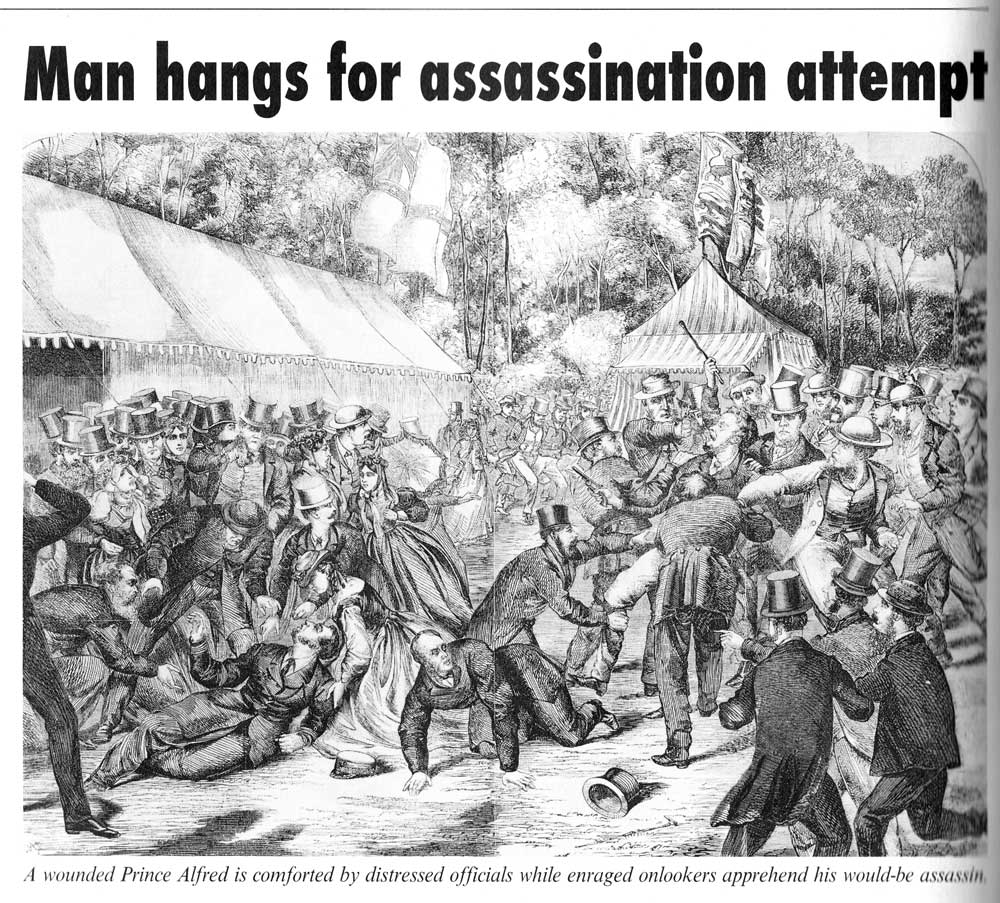
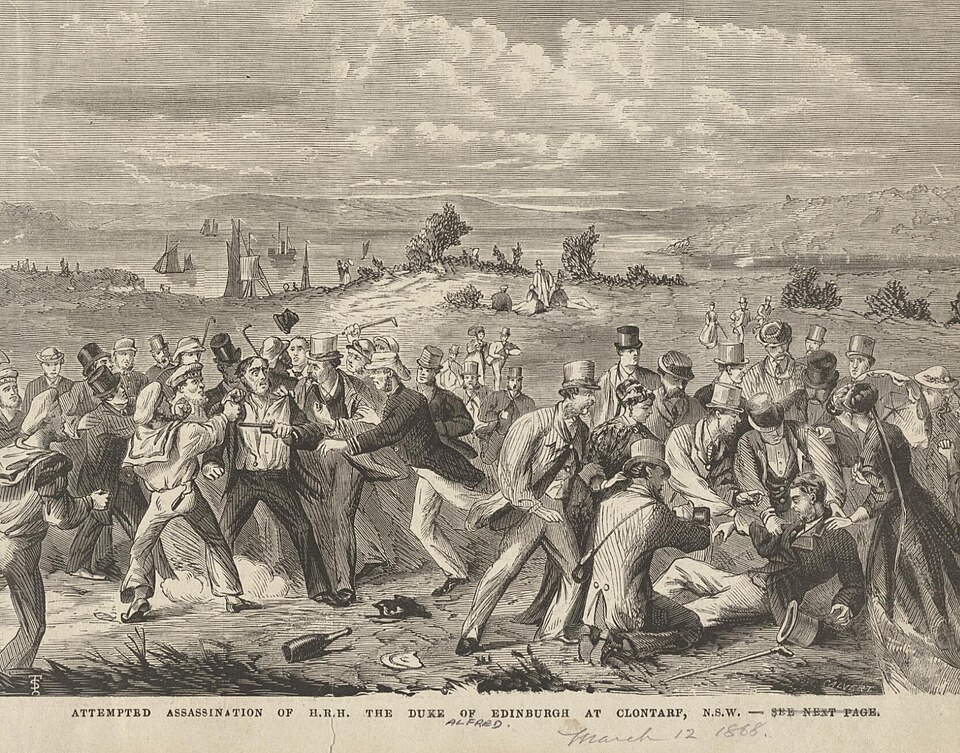
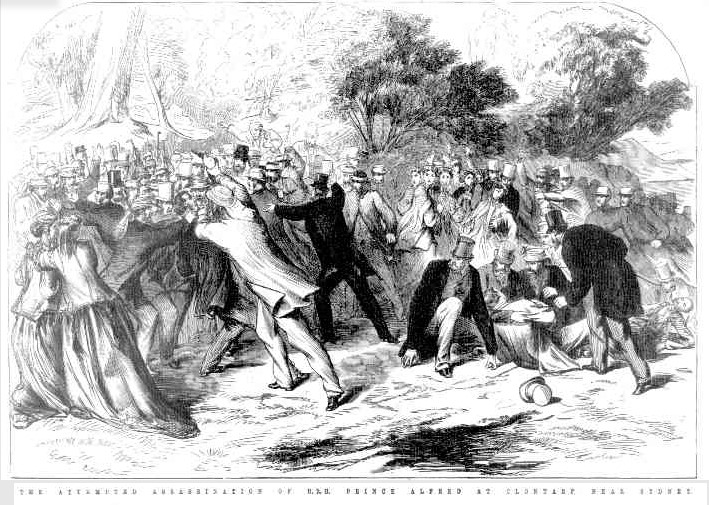
The Attempted Assassination of Prince Alfred

On 12 March 1868, during a Sailors’ Home Picnic at Clontarf, Sydney, Prince Alfred, Duke of Edinburgh, was shot by Henry James O’Farrell in one of Australia’s most shocking political crimes.

After leaving the luncheon tent and while speaking with Sir William Manning, Prince Alfred was approached from behind by O’Farrell, who deliberately fired a revolver at close range. The bullet entered the Prince’s back, travelled around his ribs, and lodged beneath the skin near his abdomen. As the Prince fell, reportedly exclaiming, “Good God, my back is broken,” O’Farrell attempted to fire again, apparently intending to kill Sir William Manning, whom he admitted to have mistaken for the Governor, Earl Belmore.

The second shot struck George Thorne in the foot after bystander Mr Vial bravely grabbed O’Farrell’s arms, preventing further accurate shots. A third attempt misfired before the assassin was overpowered.

The Prince remained conscious throughout the ordeal and was carried to a nearby tent, where naval and civilian doctors examined him. Fortunately, the bullet had narrowly missed all vital organs. 

O’Farrell narrowly escaped death at the hands of an outraged crowd, as police struggled to remove him from the scene. O’Farrell claimed he was part of a conspiracy of ten men who had drawn lots to determine who would assassinate the Prince, and alleged that Earl Belmore had also been marked for death.

The bullet was successfully removed two days later, and despite significant pain, Prince Alfred steadily recovered. By 18 March he had officially been declared to be in recovery. The attempted assassination remains one of the most significant attacks on a member of the British Royal Family ever carried out in Australia.

First Event – 7 December 1867

The first Prince Alfred Yacht Club event took place on 7 December 1867 and it was reported in detail in The Sydney Morning Herald. The 19 yachts listed as eligible for the PAYC register met the definition of a minimum boat size of 22 feet (6.7 metres) LWL and 7 feet 4 inches (2.2 metres) in beam. It was further stipulated that no boat with tanned sails should fly the Club’s colours. A fleet of 11 yachts: Australian, Gitana, Daisy, Ixion, Emma, Lurline, Royal Oak, Irene, Galatea, Dora and Spray saluted the Commodore’s Pennant as they sailed past Mrs Macquarie’s Chair.

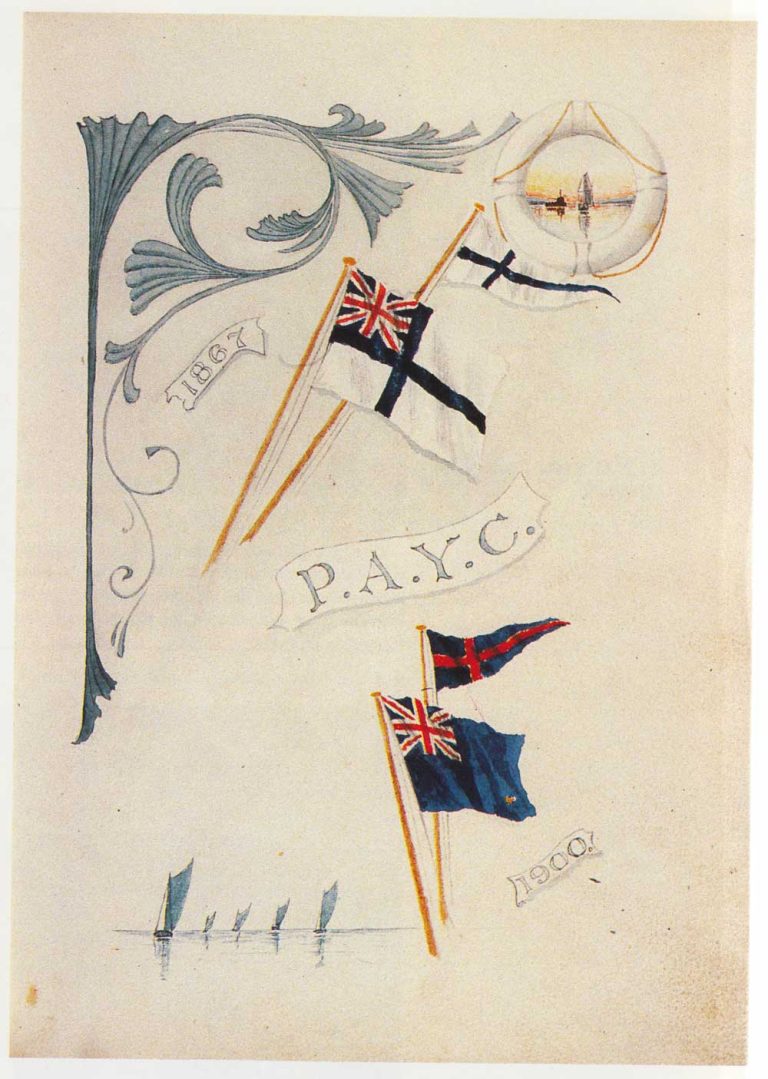
Flags
The original flags of the PAYC and the flags of today. Correspondence between the Club and The Admiralty during 1868 and 1869 saw the Club’s flags changed.

The design of the flag was given considerable attention by the committee between April 1868 and October 1869. Quite some correspondence passed hands.
J. W. G. Hanks Commodore
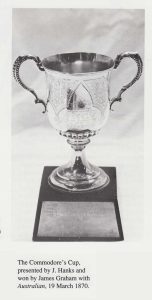
The Commodores Cup

1869

J. W. G. Hanks, Commodore 1869 – 1872

Commodore’s Cup: The Commodore’s Cup, presented by J. W. G. Hanks, was first won by James Graham on 19 March 1870 in the yacht Australian.

James Milson Era 1887
Lolan the Boat

Lolanthe was an example of the “plank on edge” type of yacht and
was owned by F. W. Murwin. The 5 tonner Iolanthe was said
to be one of the prettiest yachts of the day. She won the PAYC
Trophy Race on 5 November 1887.

The racing numbers of the yacht on the Club’s first register in 1870:
1. Reserved (probably for the Governor as today)
2. Australian
3. Gitana
4. Ixion
5. Ino

6. Scud 
7. Spray
8. Galatea
9. Royal Oak
10. Lily
11. Enchantress
12. Irene
13. Emma
14. Daisy
15. Captain Cook
16. Bronzewing
17. Challenge
18. Blue Bell

W. H. Deloitte Commodore 1872 - 1877

Opening Day 7 December 1867

The Club’s first races required yachts to start from anchor with their mainsail up. Handicaps were calculated by the yacht owners. For the first opening day, 11 yachts from 2 divisions followed Vice Commodore Strickland on board the Australian. Keeping in line was a challenge due to a flood tide and an unexpected squall from the West.

The Honourable John Henry Want, Commodore 1877 – 1882. 1878 to 1882 were known as the doldrums years in the Club’s history. An attempt to purchase some waterfront land for a harbourside club near Quakers Hat Bay, Middle Harbour came to nothing.

The Honourable John Henry Want Commodore 1877 - 1882
Dr F. Milford Commodore 1882 - 1888
Doris wasbuilt for Dr. Milford in the early 1880s.

Doris
Commodore Milford sent his 5 tonne yacht Doris to Hobson’s Bay to compete in the 1883 Victorian Yacht Club Regatta. Doris was victorious in the regatta. Dr Milford noted that Victorians still started a yacht race from fixed moorings.

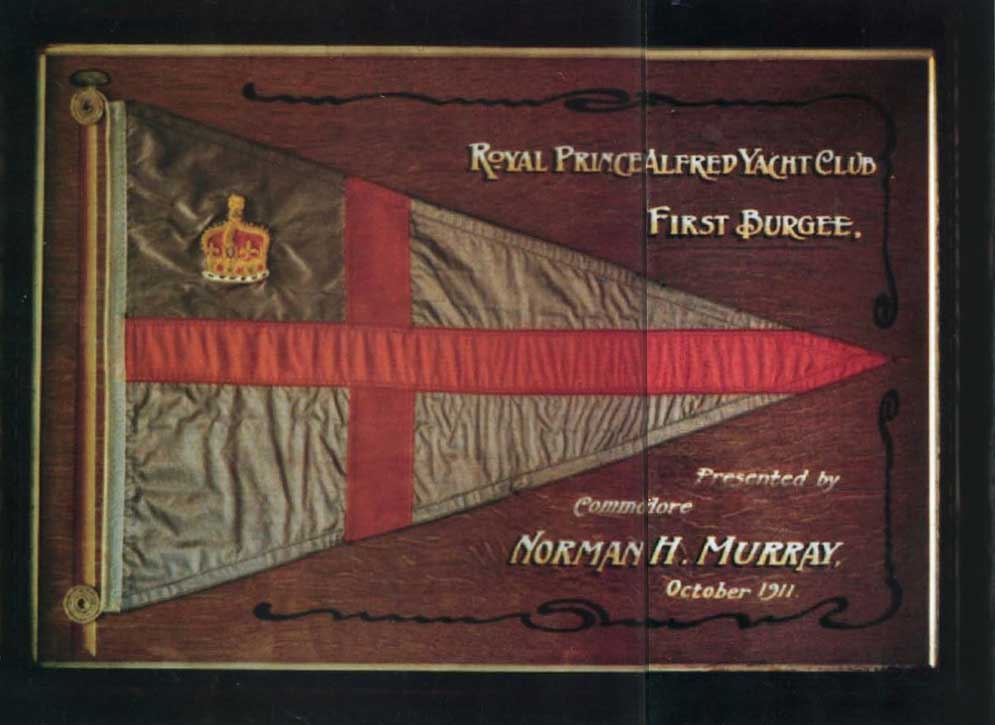
The burgee of the Prince Alfred Yacht Club, approved by the Admiralty in October 1869. This burgee was presented by Commodore Norman H. Murray.

1882

Sao
Dr Milford also owned the “B” class yacht Sao. Sao won the Club’s first ocean race in December 1886. With its ballast moved to the outside of the hull in 1887, Sao could be said to be part of first era of yacht design.

W. M. McLardy Commodore 1888 – 1891
Commodore McLardy owned the beautiful yacht Iolanthe. By 1890 the Club’s fleet was so varied that it was divided into 5 divisions. The divisions were based on a rating system taken from a formula based on the length by sail area over 6000.

W. M. McLardy Commodore 1888 - 1891
The “B” class yacht Sao
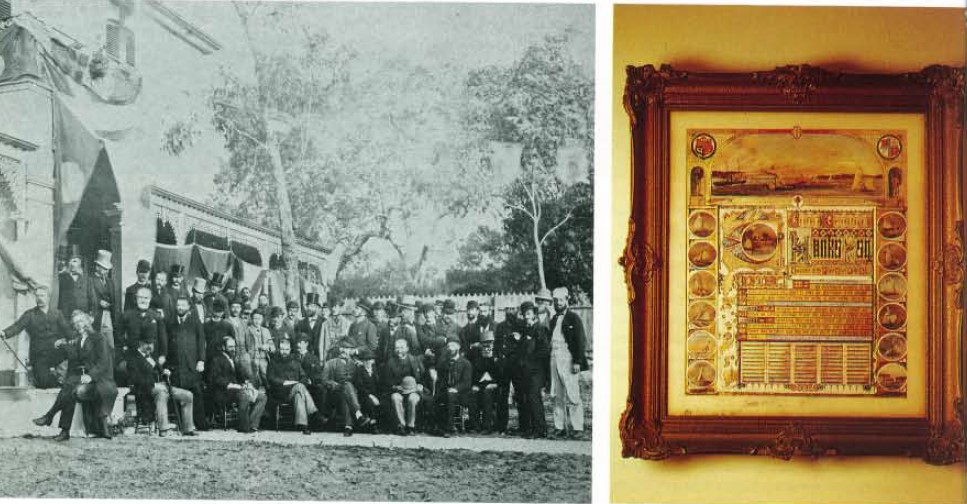
(Left) The prince Alfred Yacht Club at Manly, 30 September 1882 (Right) A testimonial presented to Commodore J. Hanks

H. S. Harden Commodore 1891 – 1892

S. Hordern Commodore 1892 – 1905

Commodore Samuel Hordern joined the club in 1873. He was a keen
yachtsman who owned a number of yachts as well as being a very active
businessman, organiser and community leader. Under Commodore Hordern the Club experienced 10 years of excellent racing with the
Opening Day often held as a regatta. The PAYC calendar at this time included an Easter Camp at The Basin. Samuel Hordern was the sole proprietor of the department store “Anthony Hordern and Sons”.

H. S. Harden Commodore 1891 - 1892
Commodore Samuel Hordern
Hordern Trophy
Meteor
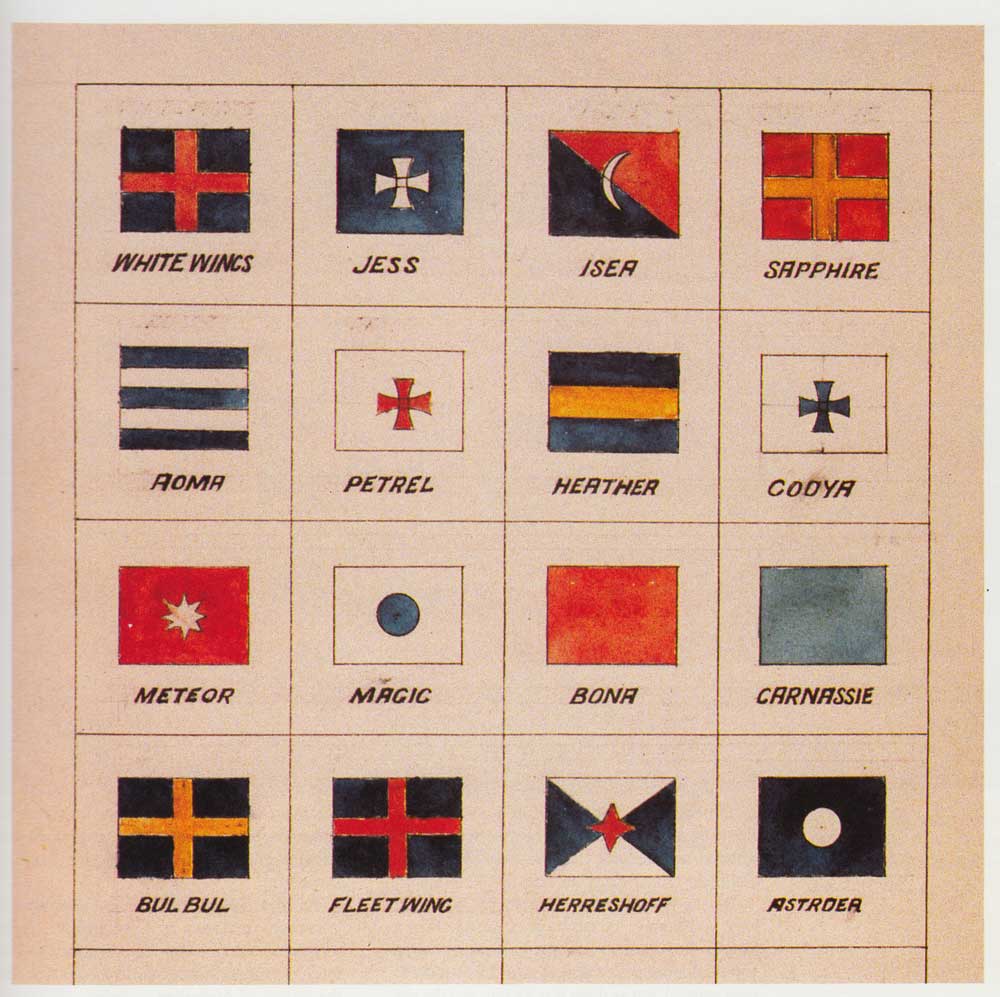
Racing Flags Around 1900 each yacht had its own racing flag.
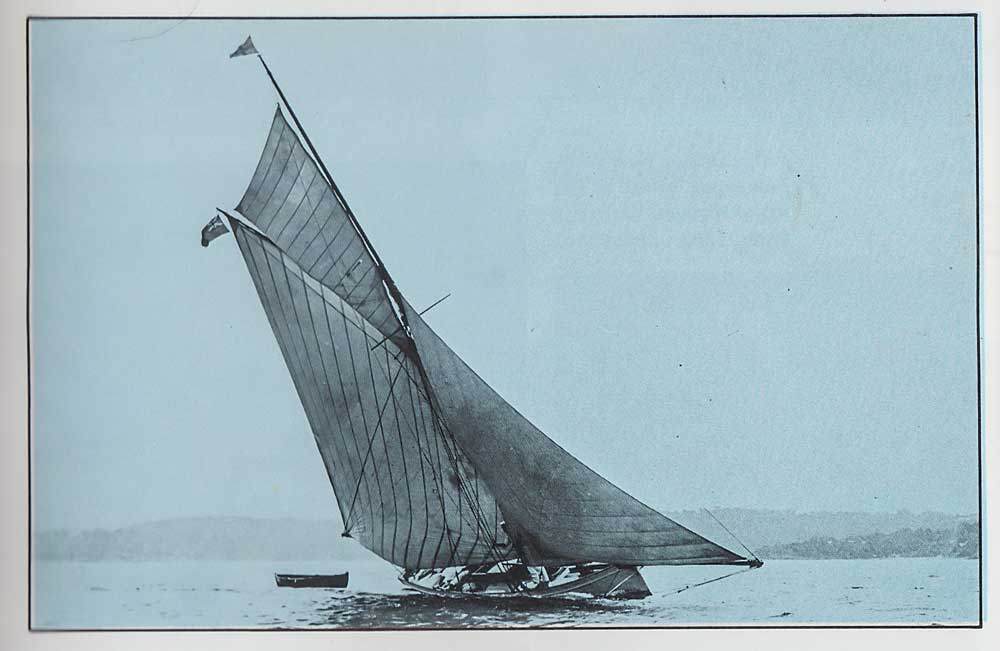
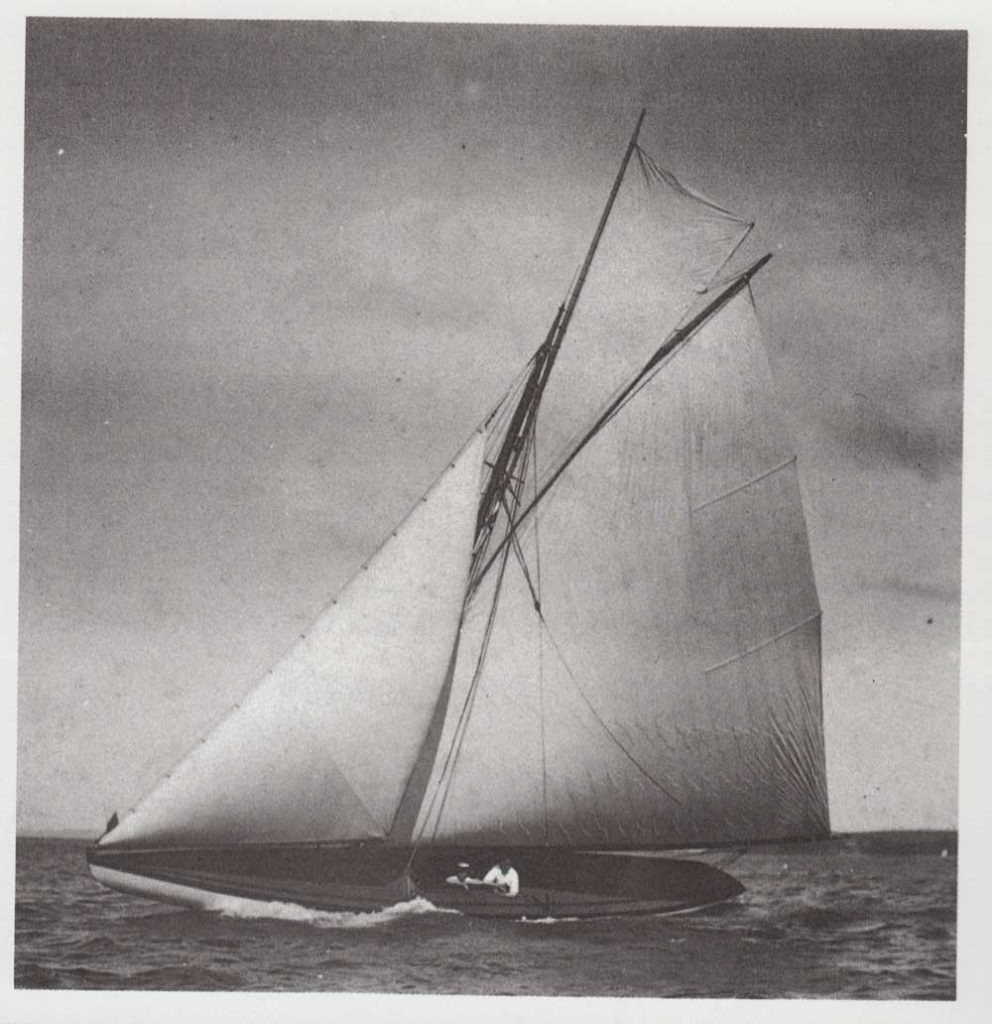
Ccotia, Magic, Bona and Sunbeam competing in the successful and exciting 30-ft rating class early in the twentieth century.

Trophies
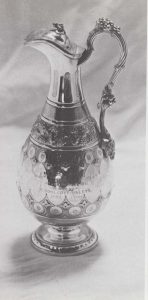
The PAYC was keen to foster Cruiser class races and 1891 provided the lovely trophy on the right which was won by F. Woolcott- Waleys in his 10 ton vessel, Ione. Cruiser class races continued in popularity.
In 1901 Dr A. R. Marks presented the fine cup on the left which was won by Isea, then owned by Dr A. C. Nathan.

Marks presented the fine cup on the left which was won by Isea, then owned by Dr A. C. Nathan.
Won by F. Woolcott- Waleys in his 10 ton vessel, Ione.
Easter at the club in 1900

Easter Camp
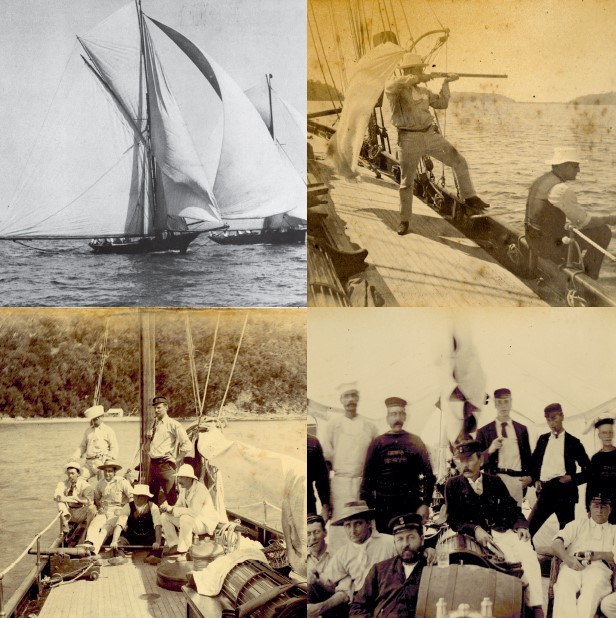
At Easter in 1900, the Club arranged a General Camp at The Basin, Broken Bay, with 10 boats taking part, an event repeated over the years. Images below, clockwise: Isea and Jesse, some shooting and fishing, campers, tent on boat.

S.M. Dempster
Commodore 1905 – 1907

Commodore Dempster skippered one of the fleet of 30 foot raters Petrel. During his time as Commodore, the Club introduced coloured flags for each yacht, and rules for a flag controlled starting sequence. The starter’s boat displayed an ensign and five flags were hoisted five minutes before the start, one to be lowered at each minute. Each yacht displayed her flag one minute before her start and lowered it at her starting signal.

Commodore S.M. Dempster

Club Rooms
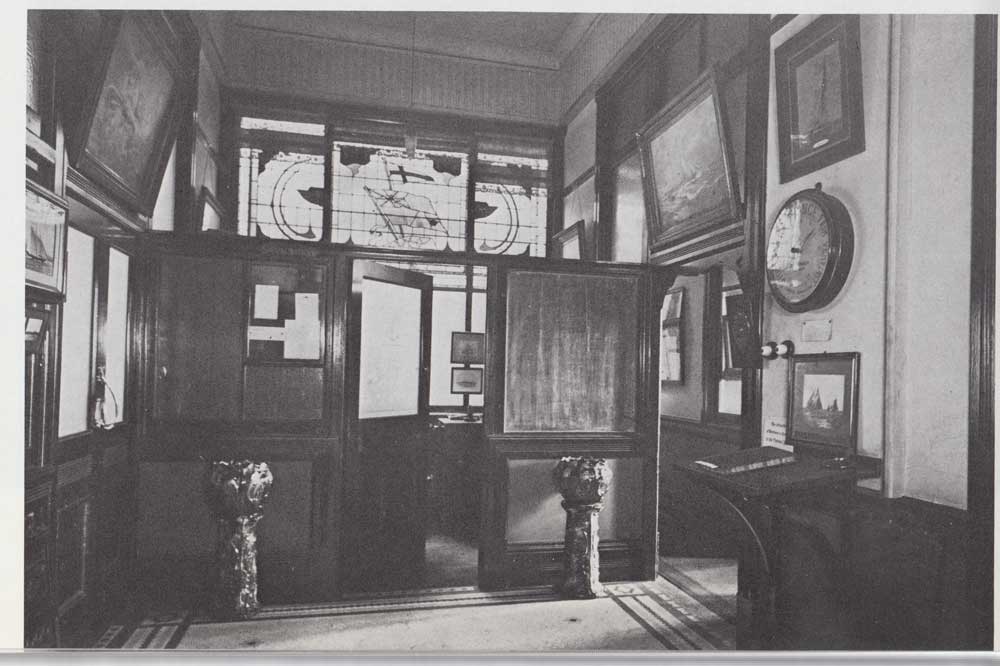
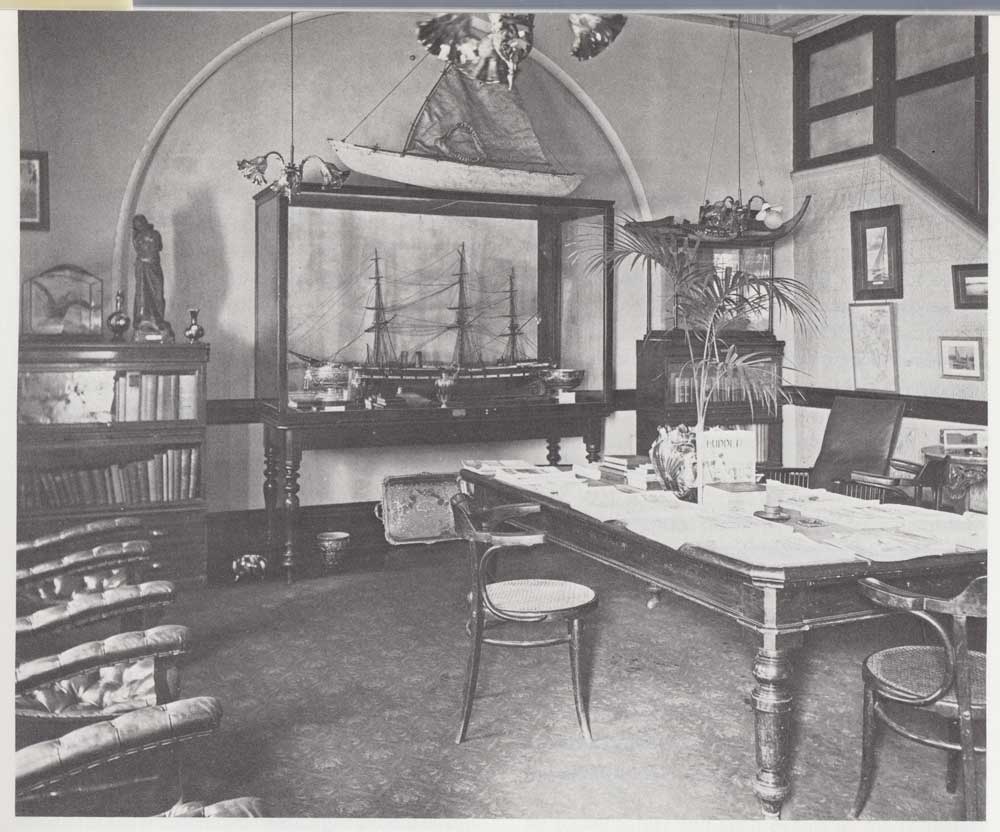
In 1900, the Club leased rooms in the basement of Bull’s Chambers in Moore Street (now known as Martin Place). Bull’s Chambers were approximately half way between Castlereagh and Pitt Streets. Below are pictures of the Club rooms about this time. The leather chairs in the Club’s foyer today were originally purchased for the clubhouse in Bull’s Chambers.

Club Rooms In 1900
Club Rooms In 1900

Rawhiti

Rawhiti was built in New Zealand by the Logan Bros and was 41 feet LR (Linear System of the English Yacht Racing Association). She was skippered by W. M. Marks and defeated Bona in 1906 in one of the first ocean races. In those days for safety, an ocean race was followed by a steamer.

Rawhiti

1906

Basin Challenge Cup
Perhaps the most famous of the Club’s cups is the Basin Cup originated by Harry Cox in 1906. The cup was named after the Basin Camp and was awarded to the winner of an ocean race from Sydney to Broken Bay (around Lion Island) and return, approximately 45 nautical miles.

It was the longest ocean race of the sailing season. The first winner after sailing in fickle breezes was C. T. Brockhoff on Rawhiti in 6 hours 26 minutes

Basin Challenge Cup
The Rawhiti Cup
The crew of Rawhiti 1913

Rawhiti Cup

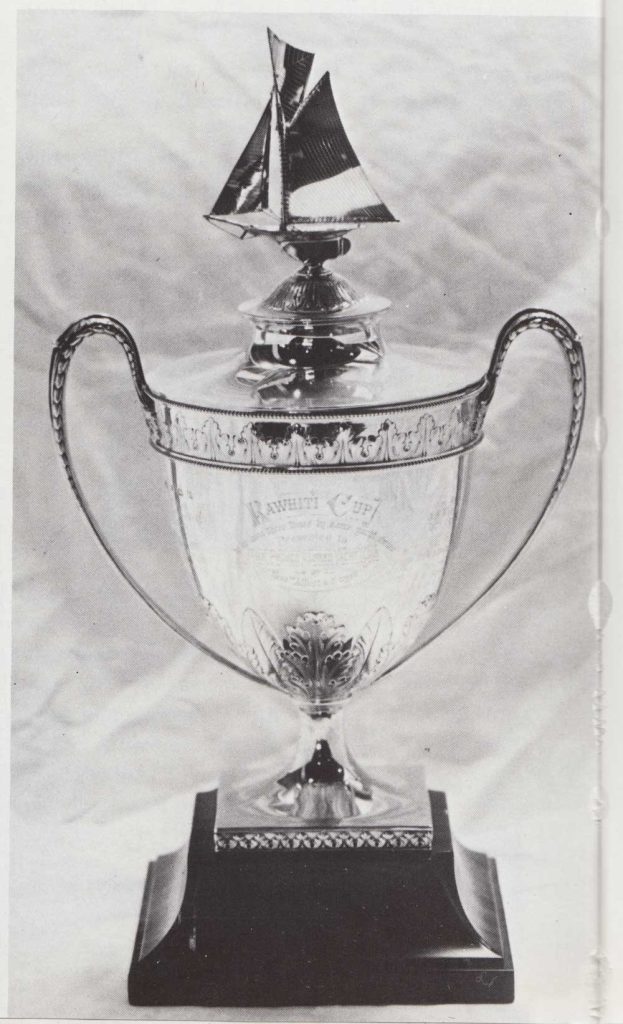
The Rawhiti Cup was presented to the Club by Messrs Albert and Sayers, who were then the owners of the yacht, in 1910.

(left) This is a photo of the crew of the Rawhiti in 1913, and it includes E. Sayer, Frank Albert and E. R. Jury.

T. Marshall
Commodore 1907 – 1909
Commodore Marshall owned and sailed the cruiser Nanoya.

N. H. Murray
Commodore 1909 – 1914
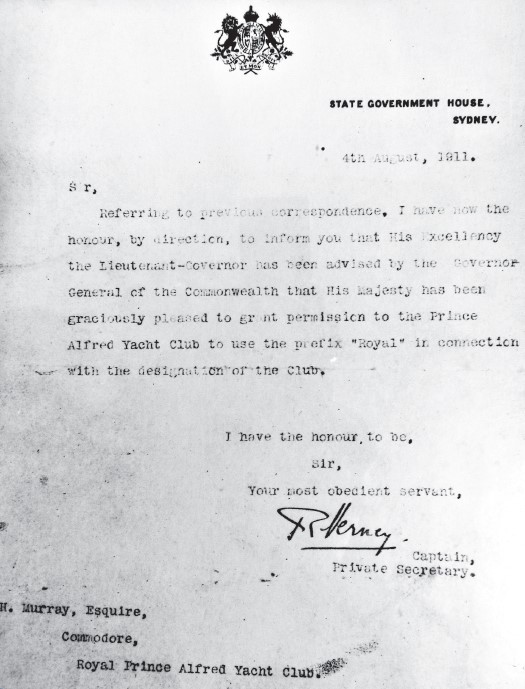
Commodore Murray was able to announce in 1911 that the Club had been honoured with permission to affix “Royal” to its name. Commodore Murray hosted the annual RPAYC mess dinner at Paris House in October 1912. The State Governor Lord Chelmsford was present and proposed a toast to the Club.

Commodore T. Marshall
Commodore N. H. Murray
Letter from government house to RPAYC
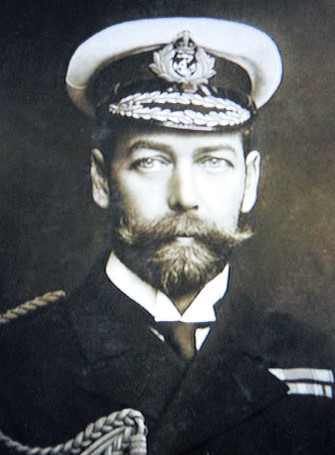
King George V

Royal Letter

In July 1910 a letter was received from the Governor-General of Australia stating that His Majesty King George V had much pleasure in continuing to act as Patron of the Club. The PAYC was the first club in Australia to be honoured by the Patronage of the King. His Majesty King Edward VII was the second Patron.
1911

Crew of Culwulla III
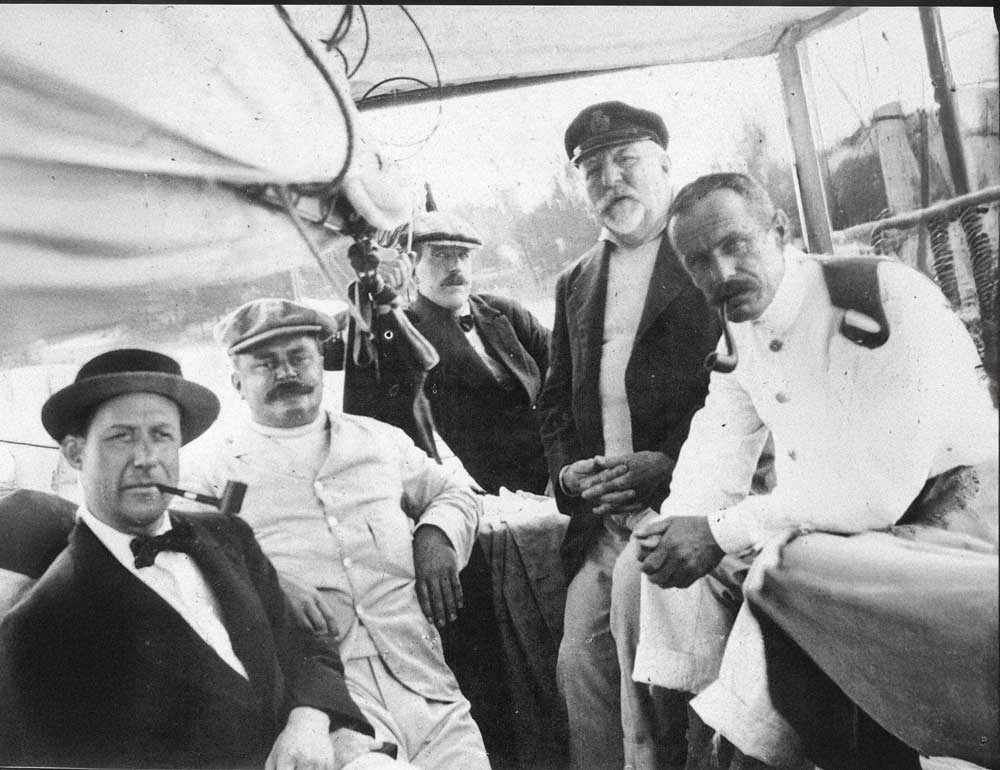
The crew of the Culwulla III owned and skippered by Commodore Walter Marks (second left in the photo). In 1910, the Culwulla III sailed to Melbourne to challenge successfully for the Sayonara Cup. Then in Hobart she also won the Hobart Carnival Race for first class yachts and the Bruny Island 100 mile Race. Note the thick jumpers but no gloves.

The Crew of Culwulla III
Culwulla III

Culwulla III

Culwulla III was one of the classic racing yachts of the era. She was designed by the famous Scottish naval architect William Fife and was built in Sydney’s Berry Bay in 1907. Sailing back to Sydney in March 1910 after her Melbourne racing successes was a challenge. Initially, light winds gave way to a big sea and very strong winds, which saw the yacht make an average speed of 8.5 knots over 15 hours but suffer some broken gear, making her very difficult to manage.

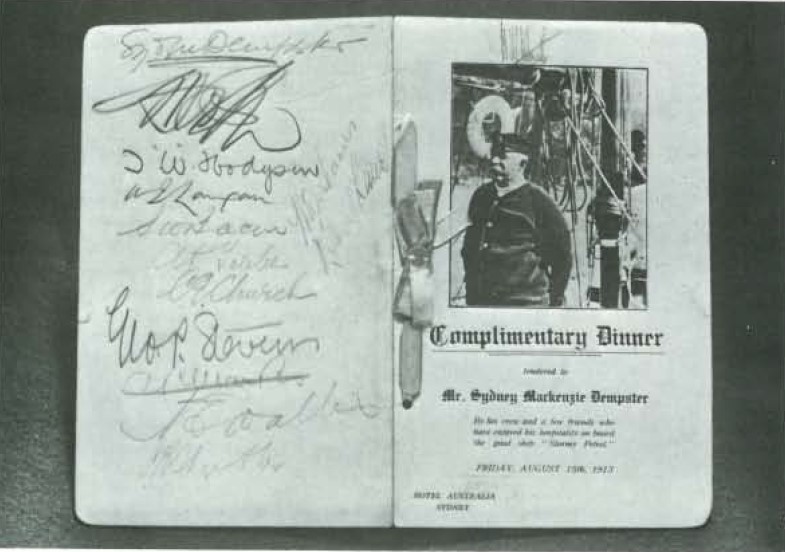
Upon Stormy Petrel's return from a somewhat boisterious South Pacific CRuise, Sydney M. Dempster's Crew held a dinner for him at the Hotel Australia.
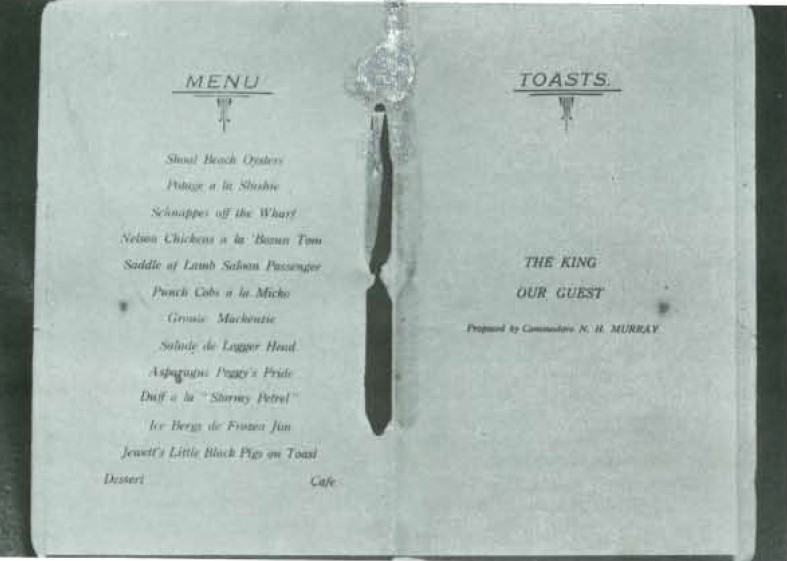
The Menu looks very tempting.

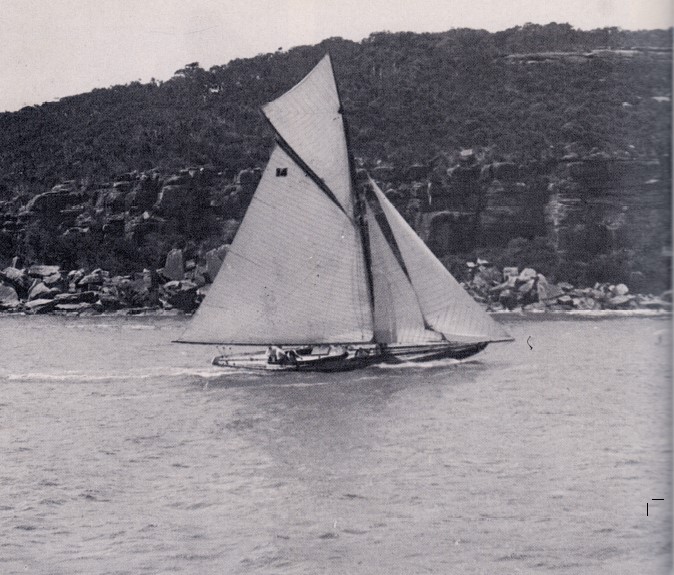
After returning from a South Pacific cruise in Stormy Petrel the owner, Sydney M. Dempster, held a dinner in the Hotel Australia.

Stormy Petrel owned by Sydney M. Dempster

Petrel Cup
The famous Petrel Cup for the Royal Prince Alfred Yacht Club’s ocean race held in November each year, was presented by Sydney M. Dempster, owner of the yacht Stormy Petrel.

Petrel Cup for the Royal Prince Alfred Yacht Club’s ocean race
W.M Marks Commodore 1914-21

1913

W. M. Marks
Commodore 1914 – 1921
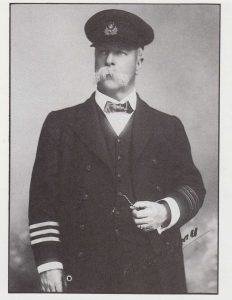
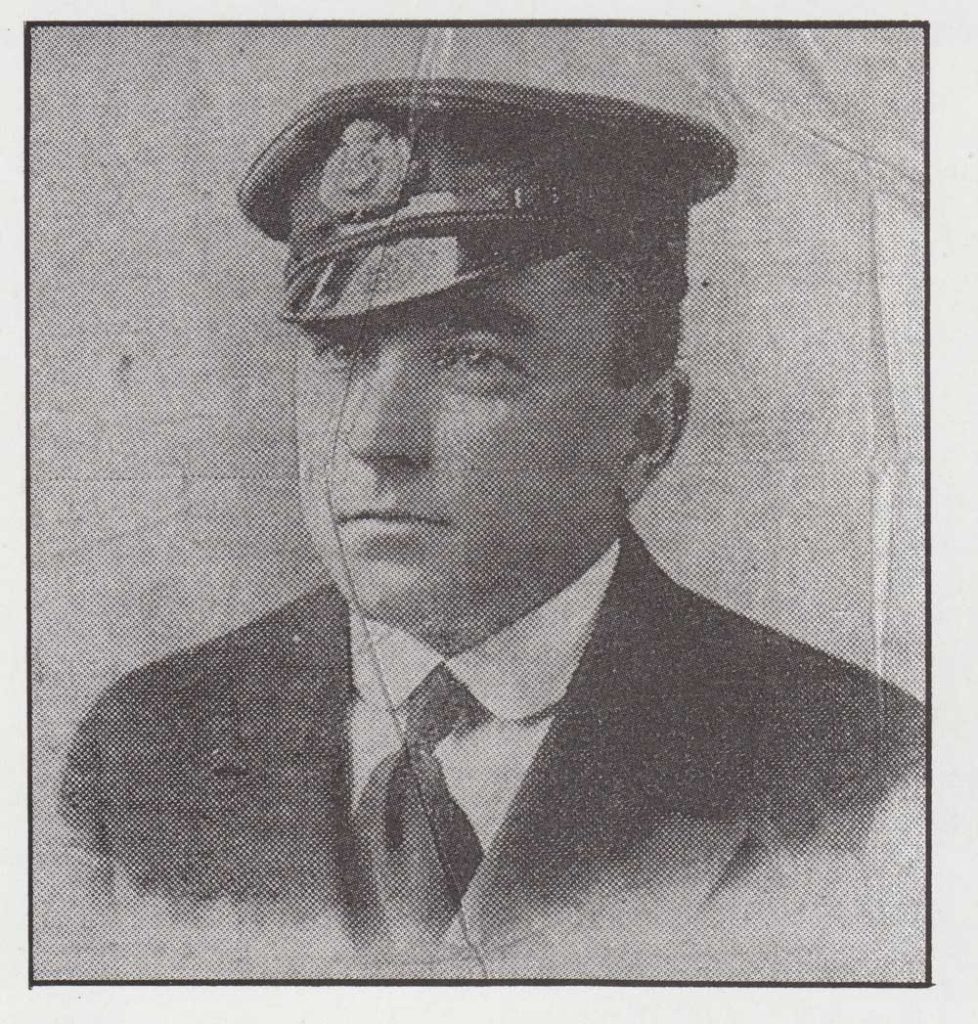
W. M. Marks was Commodore from 1914 to 1921. Commodore Marks served throughout World War I in the Royal Naval Volunteer Reserve in the Dover Command and North Sea Patrols. In 1913 the Commodore was invited to sail on the yacht Shamrock IV in the America’s Cup Challenge.

In 1914 Commodore Walter M. Marks was onboard Sir Thomas Lipton’s Shamrock IV well across the Atlantic Ocean on her way to challenge for the America’s Cup. Sir Thomas Lipton’s steam yacht Erin, was signalling: “Return. England has declared war on Germany.’ After a hurried conference, it was decided to continue on to New York, where Shamrock IV was laid up, and the crew took passage home by steamer. Shamrock IV was taken out of the dock in 1919 and challenged for the America’s Cup in 1920. She won the first two heats over the American Resolute and came very close to taking the cup home.

The club’s 1914–18 Honour Roll is as follows:

G.G. Allard
R. Anslow
S.O. Benjamin
G.F. Bestic
T. Black
Sir Rupert Clarke, Baronet
R.H. Carlisle
J.V. Cobcroft

C.S. Garland
L. Horden
H.T. Harding
C. Lindsay
S.H. Leigh
F.C. McKillop
W.M. Marks
H.E. Moors

 
The club's 1914–18 Honour Roll

Honour Roll

Due to the war, the 1914-15 race season was abandoned and all yachting
was discontinued for the duration of the war. At the 1914 Annual General Meeting the Club voted to make the first of its many donations to the war effort. In 1915 a War Honour Board was purchased. The only activity of the Club during the war was patriotic work and the entertainment of visiting servicemen. 

Club turns 50

In 1917 the RPAYC turned 50 but due to the war, celebrations were postponed until after it ended.