By Andrew Robertson
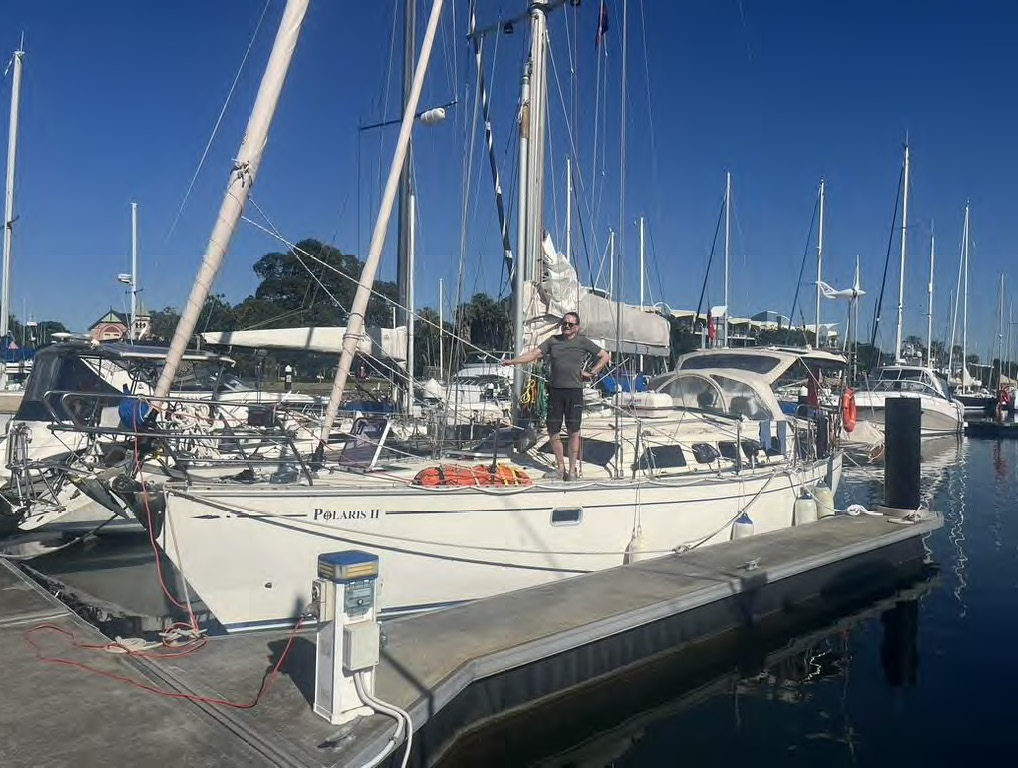
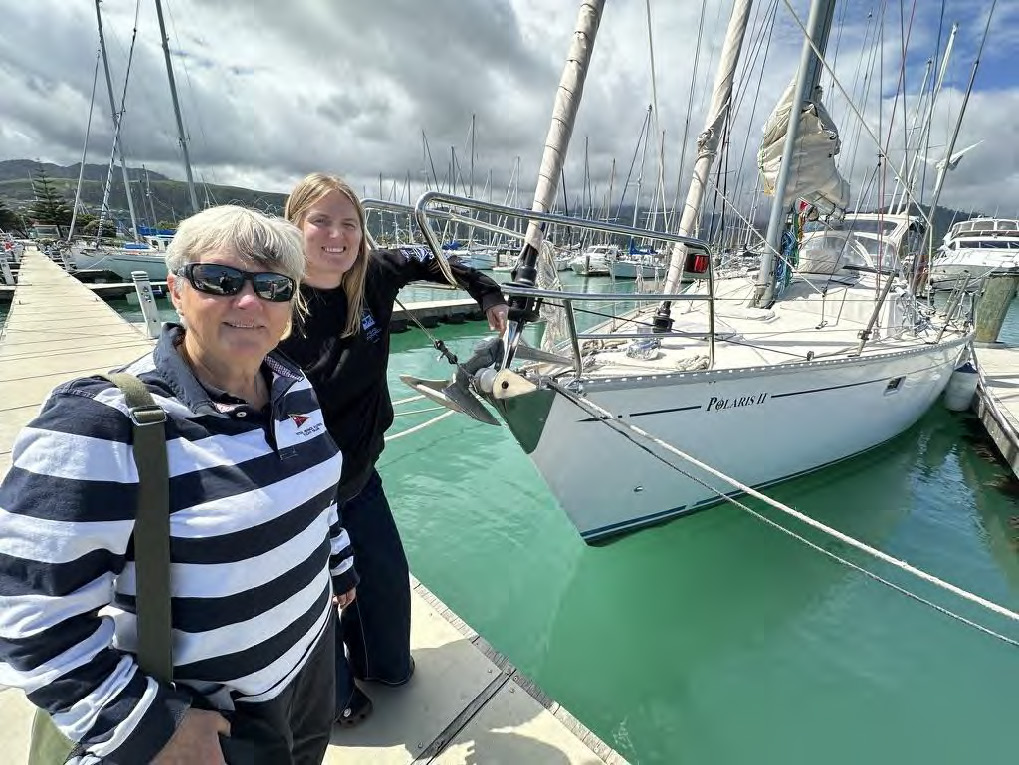
Polaris 2, a Bluewater 400, has recently arrived in Te Ana Marina, Lyttelton, South Island, Aotearoa, New Zealand, after completing a series of adventures en route, including over 2,750 nautical miles since leaving RPAYC and Newcastle in early November 2025.
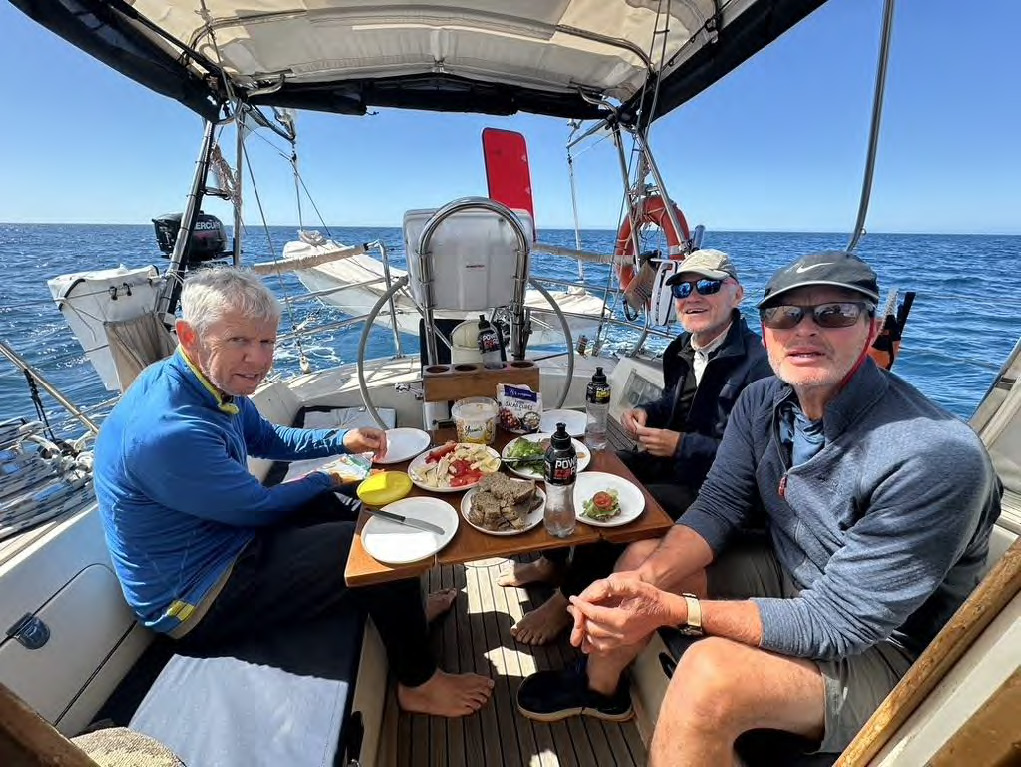
After many months of preparation during most of 2025 (utilising most of RPAYC expert on and oM site contractors with special thanks to Marty Anderson, Anderson Marine; Shane Douglas, Douglas Marine; Phil Bate, Riggtech; Shane Guanaria and Ben Gemmell, Doyle Sails and Beryn and Gabi from Ocean Covers), Polaris 2 sailed from Newcastle to Nelson, South Island NZ on Thursday 6 Nov 2025 after clearing Australian Border Force formalities. Accompanying me on Adventure 1 were Martin Kluckow, Dick Nunn and Chris Langstaff.
We had previously signed on to the Island Cruising South Island Rally 2025/2026 organised by Viki Moore and her team. Viki suggested Newcastle to Nelson as a good option for exploring the South Island before heading north to Auckland and the Bay of Islands later in 2026.
Adventure 1: Nov 2025 approx. 1,250 nm
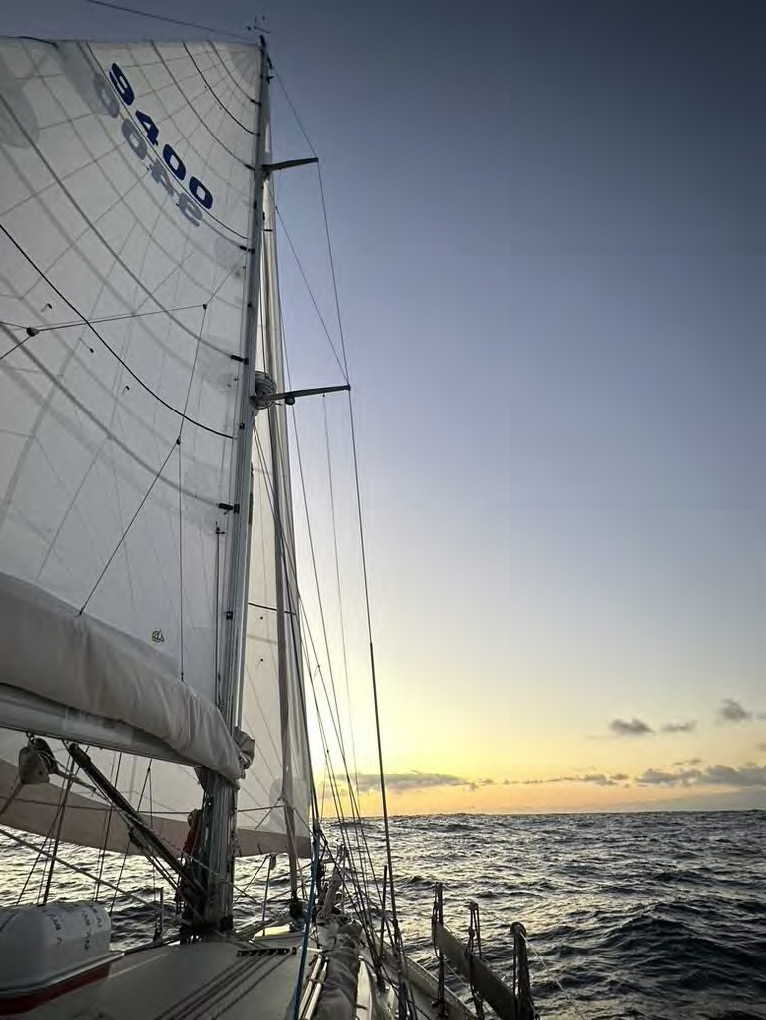
Adventure 1 started in clear skies and a following breeze. I had arranged for experienced meteorologist Kenn Batt to provide weather outlook advice before and during the trip. We aimed to sail the rhumb line course of approximately 1,150 nm to Nelson and, with Kenn’s suggestion, to stay south of the rhumb line when possible.
We had several days of good weather, and for the first three days, we averaged over 7 knots and around 175 nm each day. The weather outlook from Kenn started sounding some warning notes on Sat 8 Nov 2025, with a major cold front forecast for later the following day. Sunday afternoon saw big black clouds rolling over the horizon with thunder/lightning/rain passing to the south.
We thought we had missed the worst of it, but the darker clouds forming on the horizon a bit later suggested that we had only seen the pre-frontal trough with the main act to follow, which it did a few hours later as darkness fell and the wind started piping up (typical!). We were reading 20 to 25 knots on the wind instruments, which we thought wasn’t too bad; however, we only realised afterwards that the instruments were reading in metres per second rather than knots. I thought the instruments’ calibration might have been affected by the mast re-rigging earlier in the year, but I only noticed the m/s units on the screen a few days after the storm.
25 to 30 metres per second is equivalent to 49 to 58 knots. And we recorded gusts over what we thought at the time were 30 knots (i.e., 60 knots or more). I thought at the time that it seemed very strong for “only” 25 to 30 knots. At any rate, we decided to heave to around 2 am Monday, 10 Nov under a double reefed mainsail. After some excitement, we managed to heave to successfully, lashed the helm, and, with storm washboards secured, took to our beds while maintaining one person on watch. The motion of the boat when hove to was remarkably stable, with the boat stalled and drifting slowly sideways. The hull sliding sideways created a protective slick upwind, which effectively smoothed down the breaking seas as they approached, and we no longer had breaking waves on the deck.
Polaris 2 lay hove to comfortably under a double reefed mainsail for approx. 10 hours. We had our Coppins Para Anchor on deck, prepared for deployment, but decided that as Polaris 2 was able to remain stationary (apart from sliding sideways) and not sail out of
In her wake, we decided to defer deployment unless conditions deteriorated.
The storm abated by late morning, and we got underway under sail around noon. Freshly baked bread and a shower each helped regain crew morale. The rest of the trip to Nelson was completed in fine weather with a fish for dinner to boot. The boat survived the storm reasonably well apart from the Rutland 1200 Wind Generator. The storm stripped the blades, blew the nose cone off, and caused the main bearing to overheat and, in a screaming 5 minutes at 2 am, come to a grinding stop. I arranged a replacement via Stella Marine in Qld and managed to install it myself before the start of Adventure 2 (with only about NZD$1,000 in the swear jar!).
Interestingly, on our arrival at the Customs Wharf at Nelson Marina on Friday 14 Nov 2025, around 8 pm, NZ Customs and Biosecurity Officers said that they had been tracking Polaris 2 since leaving Newcastle (which is now standard practice in NZ,
Australia, Fiji and others. They queried why it looked like we were turning around about halfway here (referring to our 10-hour route) and thought it looked suspicious (possible drug delivery/collection rendezvous). I showed them the video of the storm we experienced. All good, and we were allowed to crash-land at our allocated marina berth for a few beers and a long sleep.
Adventure 2: Cruising in the Abel Tasman NP and Golden Bay, Feb 2026, approx. 120 nm
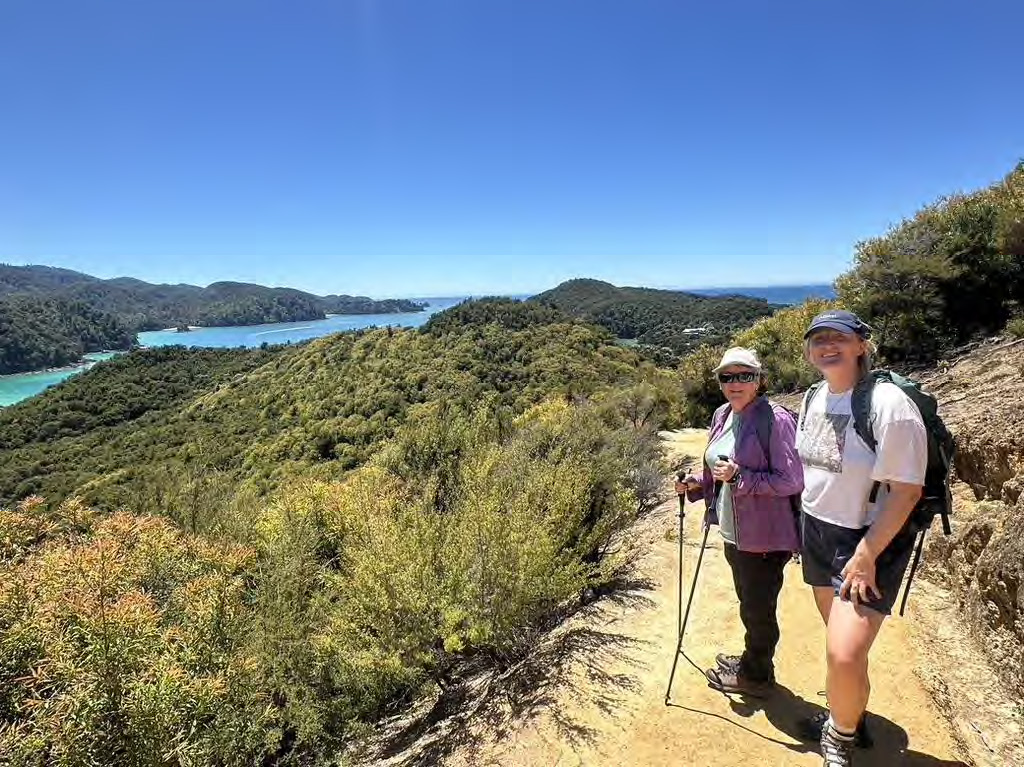
See the photos below for a brief photo record of Polaris 2, two weeks cruising in the Abel Tasman National Park coast and Golden Bay with my wife, Margaret Campbell, Martin Kluckow, Philipa Ramsay, Dianne Ramsay, and David Lawson. Six on board was a bit of a squeeze, but David slept in the cockpit unless it was raining. We enjoyed exploring Adele Island, Anchorage Bay, and Awaroa Bay (and Awaroa Lodge for Philippa’s birthday lunch, and a later pizza dinner at the outdoor staM hangout. We overnighted in Port Tarakohe Marina with a land-based visit to Takaka village and the surrounding hinterland. Days were spent swimming, kayaking, walking the Abel Tasman Track and lolling around the boat. A crew changeover via water taxi in Anchorage Bay saw Caroline Currie join me and Margaret for a few days and a delightful sail back to Nelson.
Adventure 3: Nelson to Lyttelton via Fiordland and Stewart Island, March/April 2026, Approx 1,450 nm
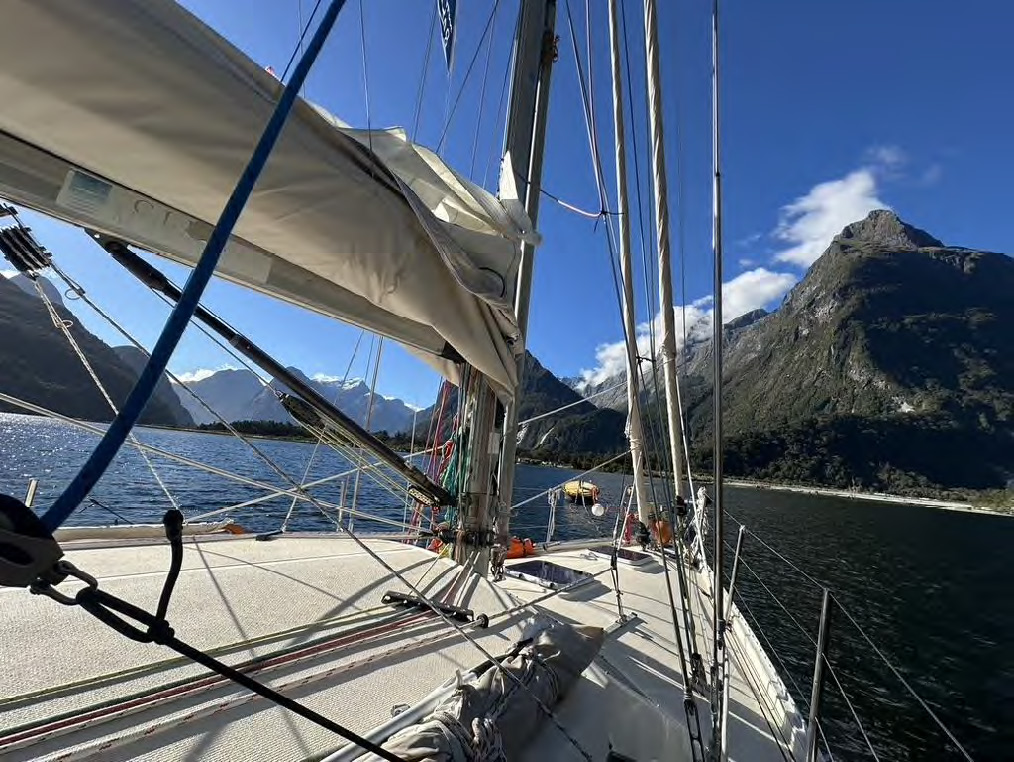
Refer to the photos below for a brief photo record of the Polaris 2 trip from Nelson to Lyttelton via Fiordland (Milford Sound and Breaksea/Dusky Sounds) and Stewart Island.
The crew for Adventure 3 were all Kiwis this time. They included Chris LangstaM (from A1), Tony McGhie (via the Island Cruising crew seeker webpage) and Martin Dack (Phillipa and Dianne Ramsay’s cousin). Martin has lived in NZ for many years after a long career as a performance analyst for over 20 years with several America’s Cup syndicates, including Australia, for the Fremantle challenge, as well as subsequent stints with AC syndicates from Spain, Japan, and the US. Martin also worked for some years as a principal with Iain Murray in the Murray Burns Dovell design office at RPAYC. Martin enjoyed his spare time on Polaris 2, working to optimise the calibration of the various speed and wind instruments, singing and cooking delicious tuna curries.
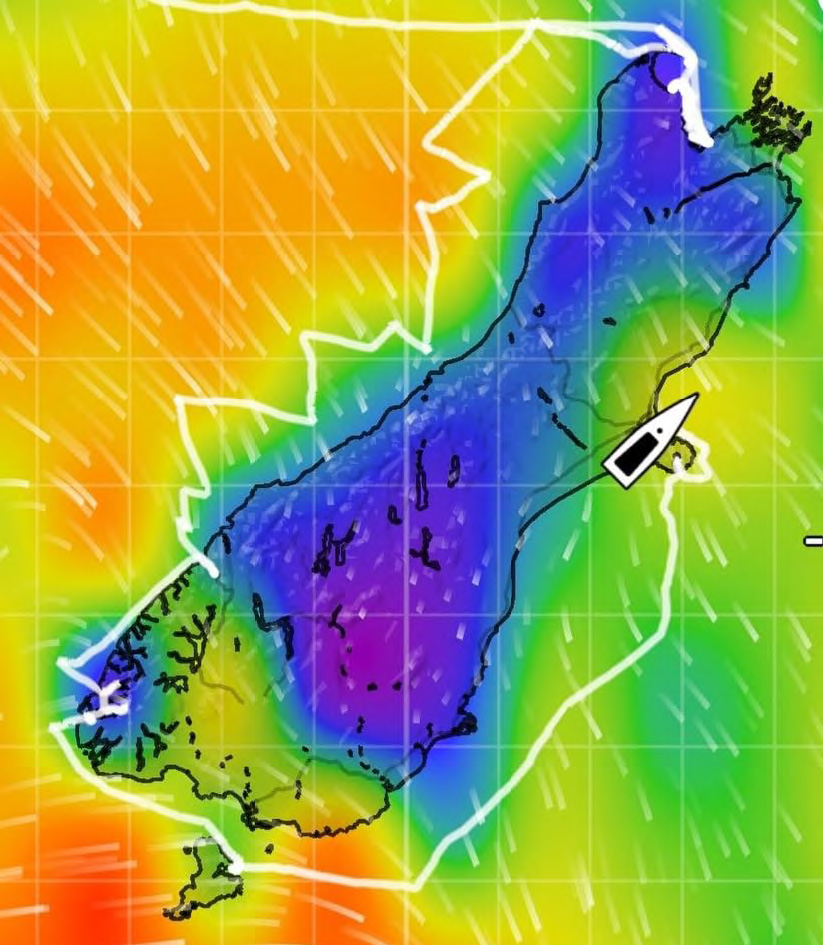
The above photo shows the progress of Polaris 2 from Cape Farewell to Milford Sound. The Rhumb line course of 350 nm should have taken us about 2 days. Due to headwinds all the way, 620 nm and 5 days later, we made it to Milford Sound, too beautiful for words.
Chris LangstaM had to leave at Milford Sound due to family commitments, so Polaris 2 continued to Breaksea/Dusky Sounds, approx. 130 nm south, with me, Tony and Martin.
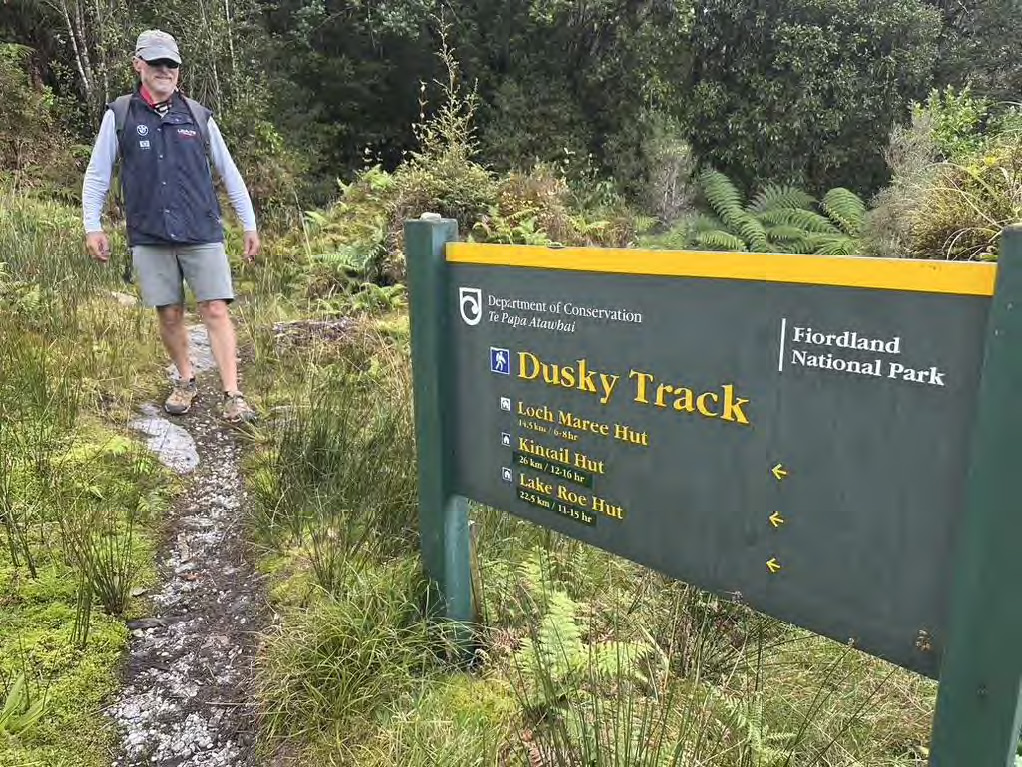
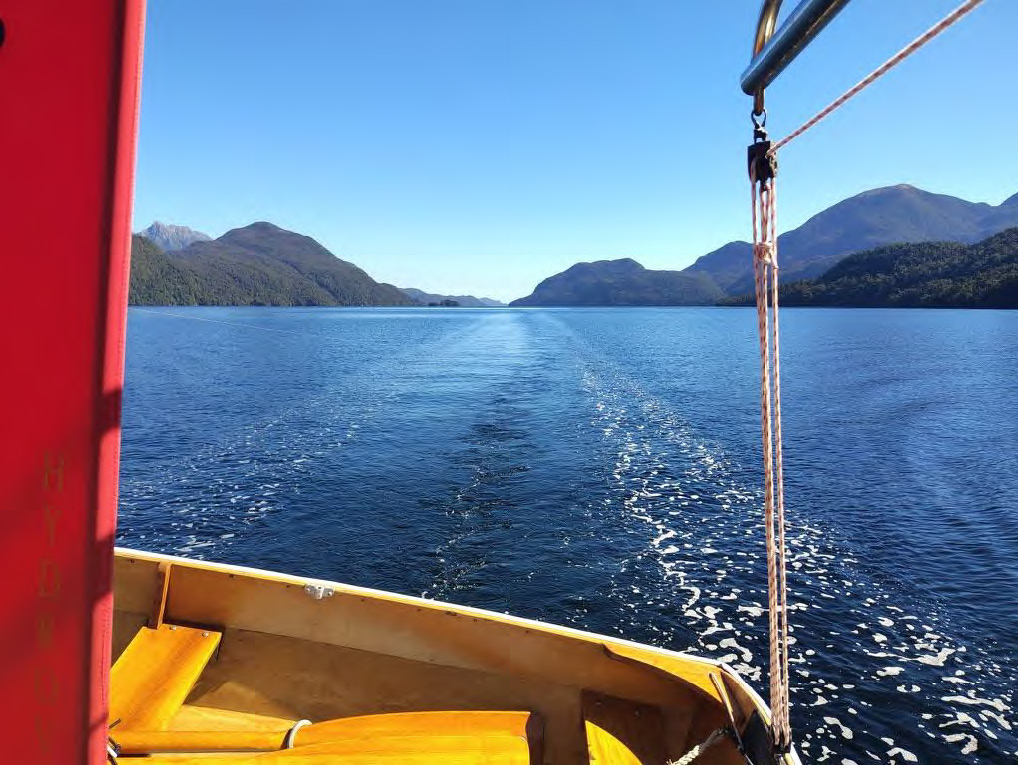
The Breaksea and Dusky sounds comprise the largest fiord complex in Fiordland and are rich in Maori and European settlement history, including Captain Cook’s first exploration of this area in 1773. It is a visually stunning remote and inaccessible wilderness area that must be seen to be experienced. The attached photo deck attempts to convey some of the remarkable beauty of this area.
We sheltered in Cascade Cove during a forecast severe cold front, using stern lines and an over-100-m chain on Thurs 26 and Fri 27 March. On advice from Kenn Batt to leave early and before the next severe cold front expected in a few days, we left at 3 am Saturday to sail to Stewart Island (navigating out of Dusky Sound at 3 am in the pitch dark by chart plotter, waypoints and radar is not for the faint-hearted!).
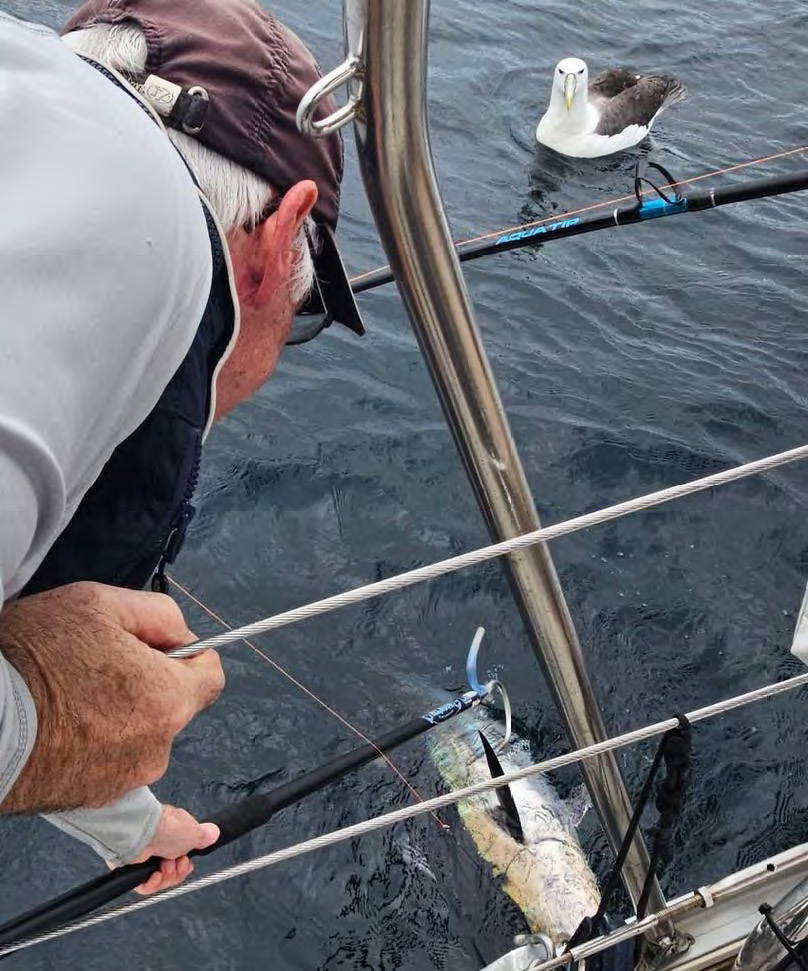
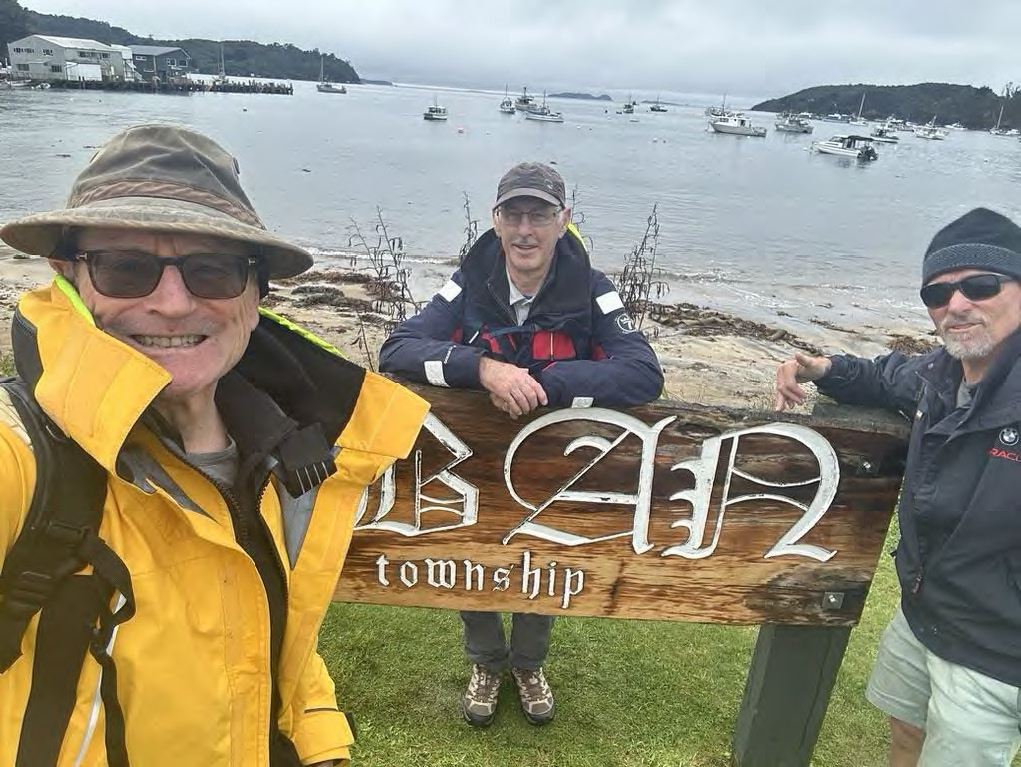
We had good weather and a 20 kg Tuna to help us sail the 135 nm to Stewart Island and anchored in Preservation Inlet near the water taxi jetty late Saturday night. A local fisherman lent us one of his moorings (rated to 50 tonnes) which came in very handy when the major front blew in on Monday 30 March at over 50 knots (Kenn Batt forecast “it will blow dogs oM chains”) Seethe photos below for our timely appearance on Sunday 29 March at the South Sea Hotel Sunday night weekly quiz night – the fresh fish and chips were amazing!
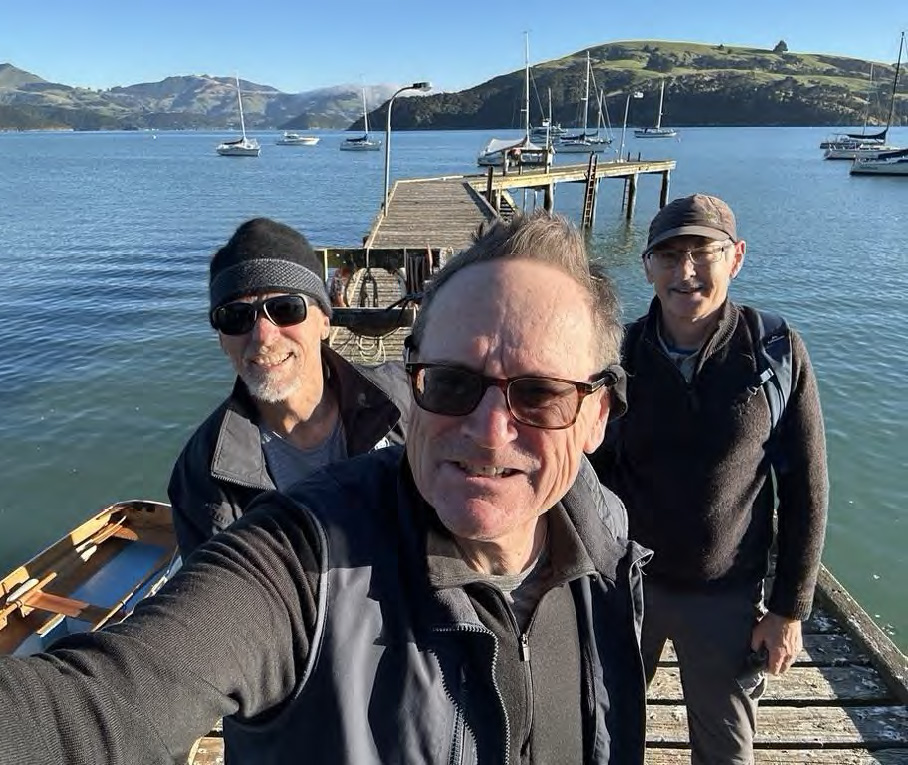
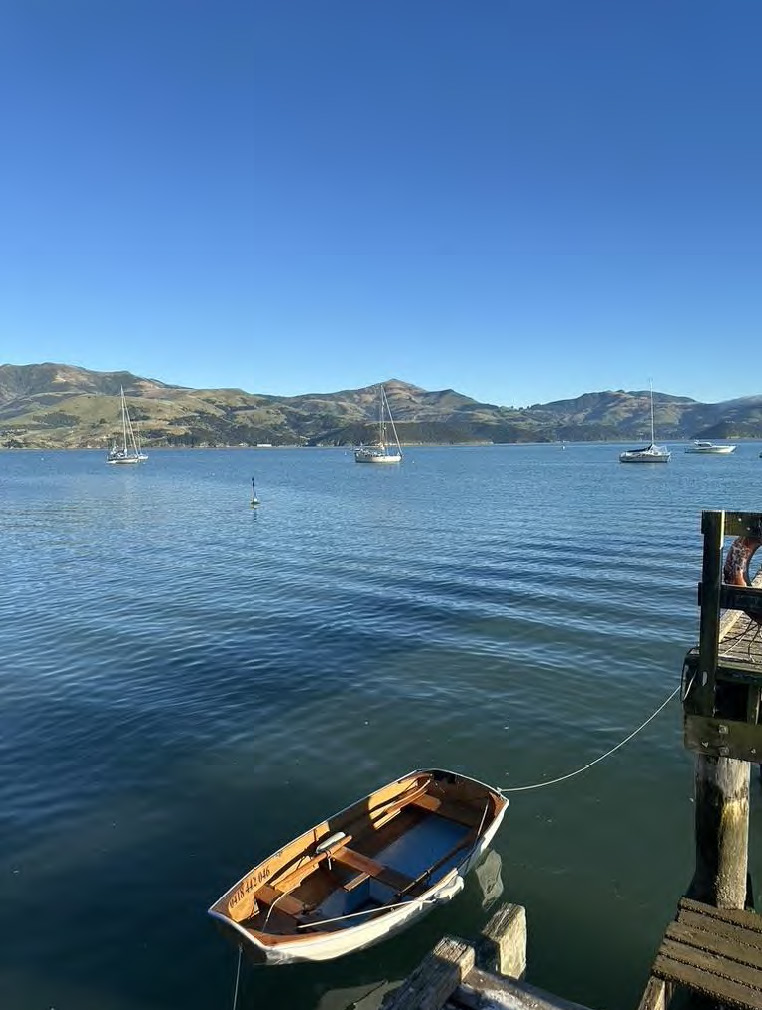
Tuesday 31 March saw us refuelling at Oban wharf (for NZD $4.30 a litre – over twice the usual rate) and starting the 340 nm to Akaroa (see photos – no wonder it is called the Jewel of the South), and courtesy overnight use of the Akaroa YC mooring and the club
facilities (thanks, Jonny Bell).
A 65 nm hop through the complex cross-currents east of the Banks Peninsula led us into Te Ana Marina, Lyttelton, around 11 pm that night and to our pre-booked berth. After a late-night red wine dinner and a long sleep, the crew enjoyed a few days’ shore leave in Lyttelton before flying back to our respective homes. Polaris 2 is safe and secure in Te Ana Marina until further adventures in NZ and the South Pacific later in 2026 and 2027.
Story credit to Andrew Robertson