

Seamanship Series – Chapter 2: Wind Cheetah Heading North, Beyond The Bars
As winter approaches my excitement once again builds for what’s become an annual pilgrimage to the warm Northern Queensland weather. I’m pretty sure this is my 16th trip North either delivering my various cats over the years to do Brisbane to Gladstone races and the August race weeks at Airlie and Hamo and with some cruising in between.
However, there’ll be no racing this season for Wind Cheetah, we’re just cruising and the plan is to go all the way to Lizard Island, for the second time.
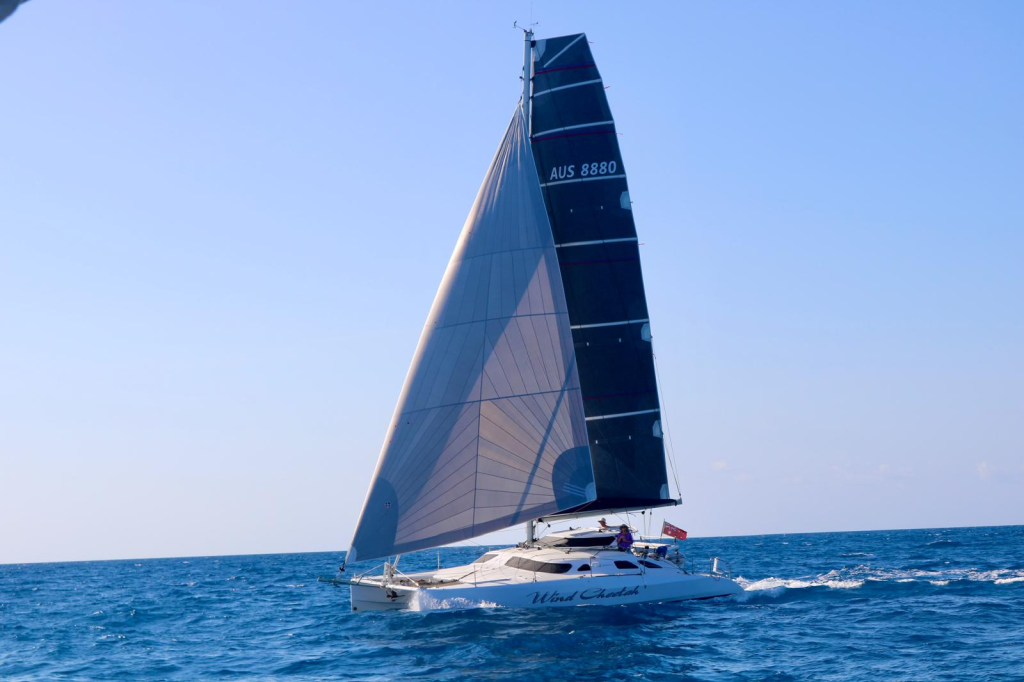
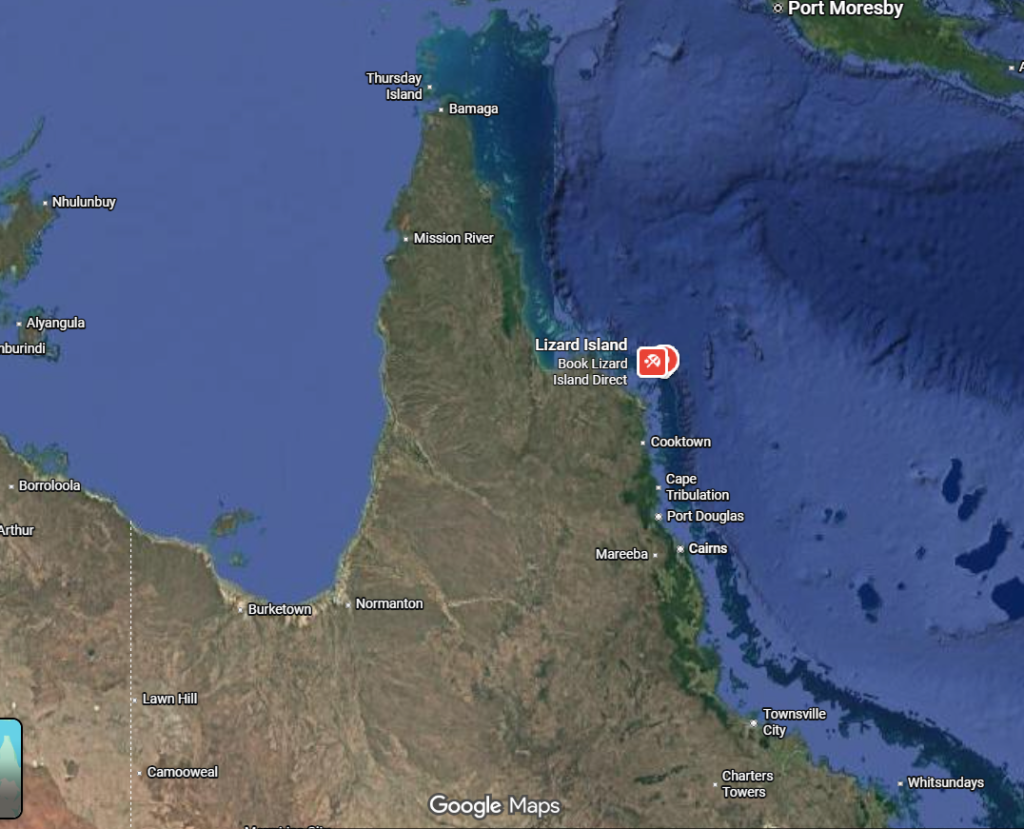
Cruising North sounds wonderful to most. However, it comes with many more challenges than we’re used to when we’re cruising our beautiful local waterways.
Once we leave Pittwater or the Harbour there’s those confusing navigation marks everywhere, narrow channels, shallow water everywhere, big tides, rocks, and the big one, BARS, (no not the bars we all enjoy at the club). I’m talking about the type that will pounce on you like the grim reaper from the sea and often without warning or any notice.
As most would know there’s a number of treacherous bars between Sydney and the bottom of Fraser Island. All these Bars need to be carefully considered to ensure safe passage.
I’ve crossed most of them at some stage and some of them every year. So, let’s get the NSW bars out of the way first.
The best advice I have for NSW going North from Pittwater is after you pass Port Stephens, don’t stop. Pick a two day suitable weather window and go non stop, it works every time. Less stress, less risk, safe! I just don’t like going over NSW Bars because they may be ok going in and then you can get stuck and not able to get out because the weather changes etc. If you do need to stop somewhere, Coffs Harbour would be the best choice. (Editors note: Coffs Harbour is 159 nautical miles north of Port Stephens and 151 nautical miles south of the Gold Coast Seaway – 159 / 6 knots = 26.5 hours 159/7 = 22.7 hours).
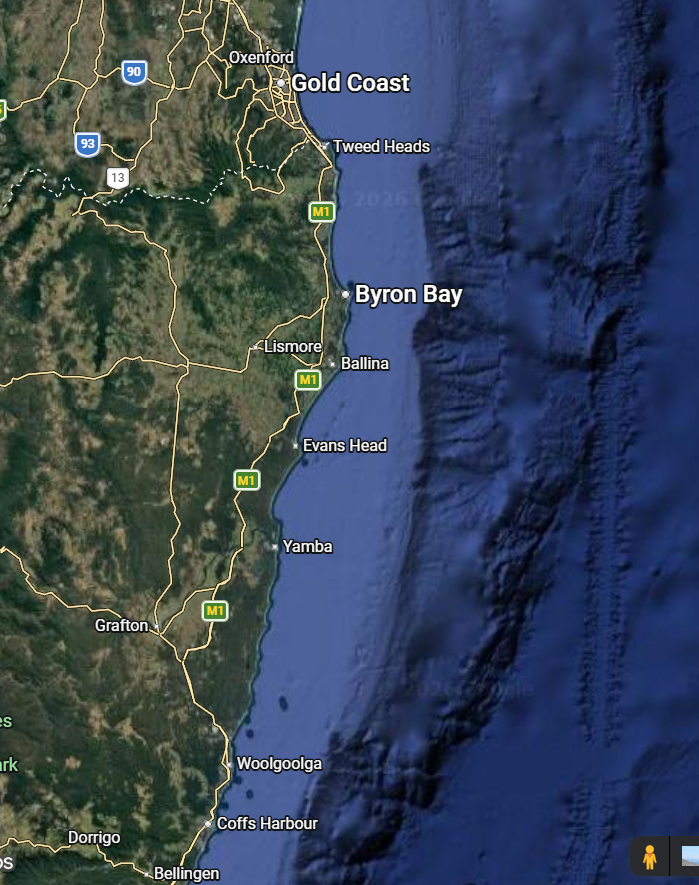
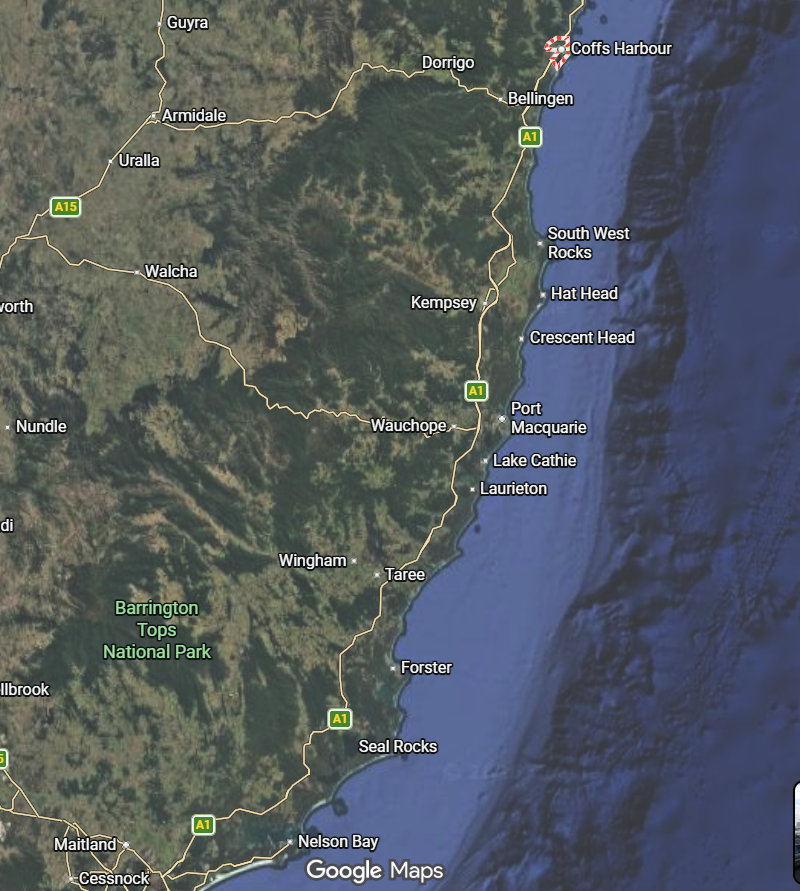
Just last month I went non stop on Wind Cheetah from the club to the Gold Coast. If you are going non stop be sure to choose an experienced ocean sailor to share the trip. My crew for my recent trip was with one of my dear friends, RPAYC race crew and pro Navigator, Alice Tarnawski. We did three hour shifts ate well and arrived in great shape and without stress of Bar crossings.
(Editor’s Note – for those without a pro navigator and with night time Whale phobia – those guys rest near the surface and there are migration compression points where the continental shelf narrows at Byron Bay and other headlands along the coast – we will be having a chapter by Greg and Tania Ebeling from their trip north on Bellissima, as part of the seaman series about how to go north without sailing overnight.)
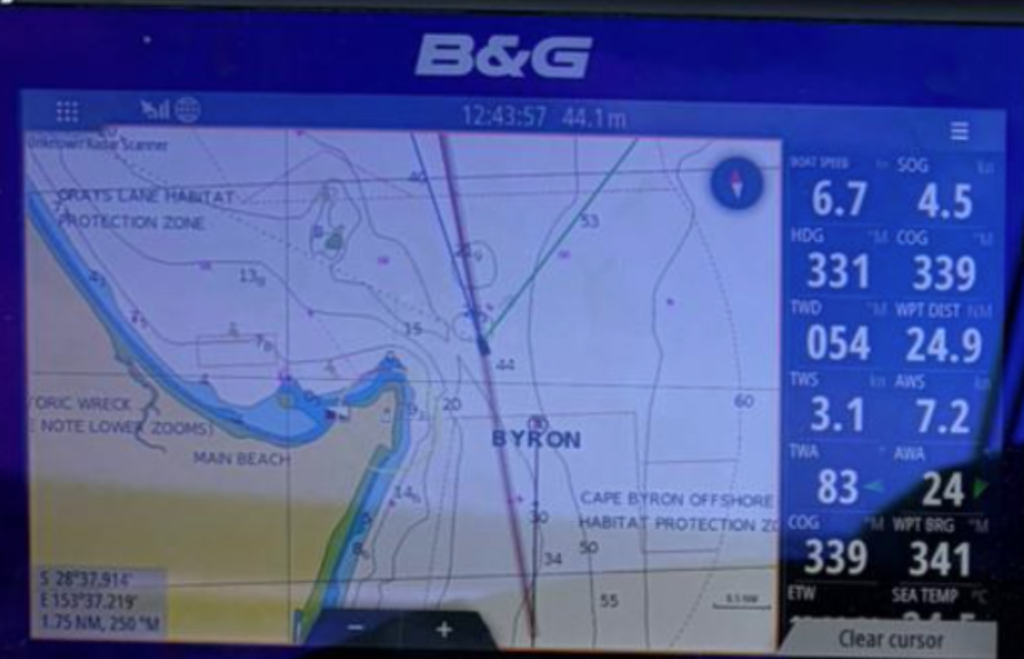
The following screen shot shows how the East Australian Current comes in close to Cape Byron where I am battling against the current. Boat Speed 6.7 kts and SOG 4.5 kts. The Whales are aware of this too and keep in close to shore.
So that’s NSW done. Now there’s two more tricky bars that unless you go around the outside of Fraser Island, non stop from Moreton Bay, you will have to go over the Wide Bay Bar and possibly into Mooloolaba. Mooloolaba is the only stop after Moreton Bay before Wide Bay Bar. Stopping in Mooloolaba will help with your timing and planning for the crossing.
Mooloolaba Bar
It seems that every year Mooloolaba’s entrance is silted up at the channel and the entrance is pretty much non-existent. In the past I’ve gone in as suggested by Marine Rescue from the beach side on the west and duck around the end of the western break wall. This route is published as a notice to mariners, be sure to check for this before considering entering the river. The entrance is towards the beach and then a dog leg around and inside the waves breaking on the bar.
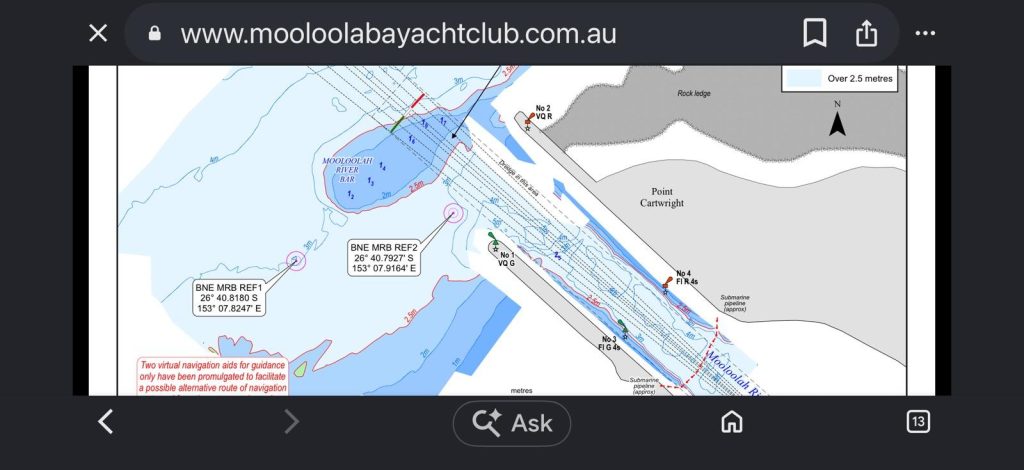
Before you go to Mooloolaba, be sure to phone Marine Rescue the day before you go to Mooloolaba to confirm the entrance passage, then on the day before arrival call Marine Rescue on VHF 16 at least 45 mins before you get to Mooloolaba to confirm your entry. If it’s tricky they may even send out their vessel to guide you in.
Wide Bay Bar
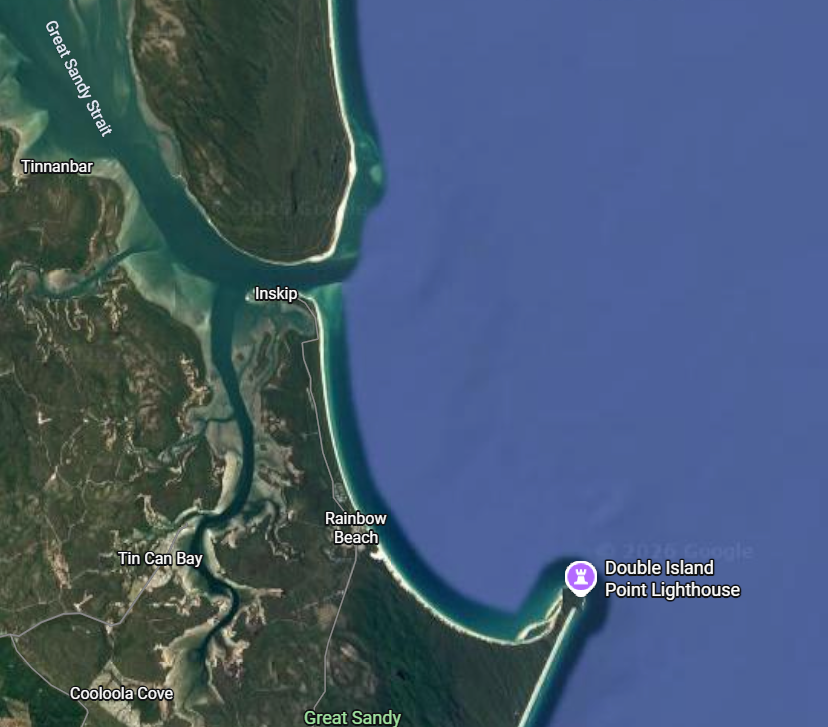
Wide Bay Bar is another story. You won’t get much help from Marine Rescue. They just won’t commit to conditions on the bar or if it’s a good day to cross. They will confirm the suggested waypoints to follow, which are now virtual AIS waypoints. If you stick close to the suggested waypoints and don’t attempt this crossing in any swell bigger than 1.5 meters and never at night, you should be ok. If you do need to wait to cross, the best option in appropriate conditions is to anchor in behind Double Island Point.
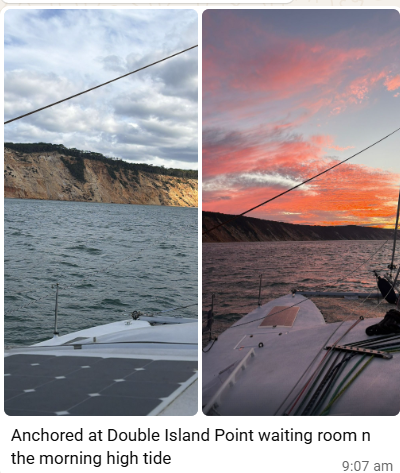
Early morning is best time to cross if tides and weather allow and only on an incoming tide, ideally during the last hour before high tide. Wide Bay Bar is not to be messed with and never put deadlines on when you have to cross. We waited up to 8 days one year to cross before conditions were acceptable.
There is another option that you may hear about. This option is known as the Fisherman’s Gutter and follows Rainbow Beach along and in around Inskip Point. I wouldn’t recommend it to deep draft monohulls but for multis it’s an option for the experienced skipper or some follow an experienced multihuller who has done this passage previously. Suitable conditions is the key to either option for crossing Wide Bay Bar so keep that in mind and don’t keep to timeframes.
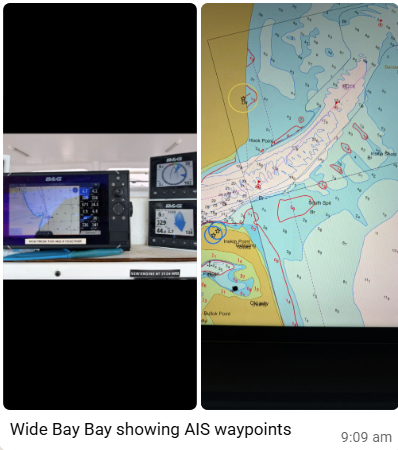
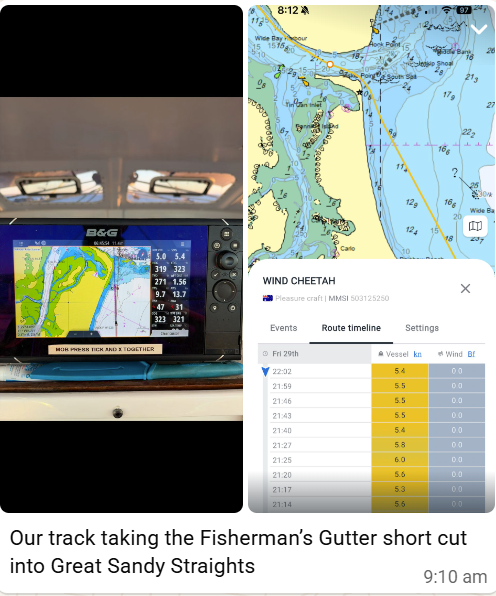
This is just my personal experience and opinions. You should always research any foreign waterway before leaving your home port. There is so much experience around our club and members are always happy to share.
My five seamanship points for this part of our trip are :
1. Don’t set deadlines when you’re cruising. Meeting family and friends in ports on specific dates can drive poor seamanship and create risk
2. Always obtain all the information available before crossing any bar. Seek information from, Marine rescue, coastguard, local knowledge, fellow cruisers, bar cams, wave monitoring buoys, weather apps.
3. Be sure to have appropriate anchors and ground tackle as you may have to anchor off ocean beaches to cross the Bar in daylight and at the right tide times
4. Wear your life jacket
5. Be prepared for what could happen. Wash boards in as rough waves can occur. Emergency steering should be on hand, sails ready to hoist if the motor cuts out, VHF on channel 16 and able to hear it, don’t leave the cockpit unless it’s absolutely necessary. Life jackets.
Good sailing.
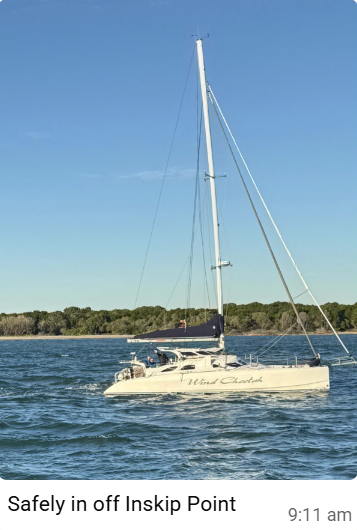
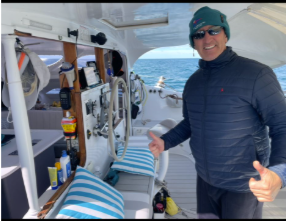
Chapter 3 will be by Matt and Jo Kirlew on Jindarra – sailing the Indonesian Archipelago